When dopamine blocker toxicity, a dangerous reaction caused by drugs that block dopamine receptors in the brain. Also known as neuroleptic malignant syndrome, it can turn a routine medication into a medical emergency. This isn’t just a side effect—it’s a system-wide collapse that can spike your body temperature, lock your muscles, and shut down your organs. It happens most often with antipsychotics, anti-nausea drugs, and some older antidepressants. You don’t need to be on high doses. Sometimes, just adding one new pill to your routine is enough.
Many people don’t realize that common drugs like metoclopramide, a widely prescribed nausea medication or promethazine, used for allergies and motion sickness can trigger this. Even antipsychotics, medications used for schizophrenia and bipolar disorder carry this risk, especially when combined with other drugs that affect liver enzymes. The problem gets worse when you’re on multiple meds. Think of your liver as a busy intersection: if too many drugs try to pass through at once, they back up and cause chaos. That’s when dopamine blocker toxicity kicks in. Symptoms start quietly—fever, stiff muscles, confusion—but they can spiral into kidney failure or cardiac arrest within hours. If you’ve started a new drug and feel unusually hot, rigid, or disoriented, don’t wait. Call emergency services.
It’s not just about the drug itself—it’s about what else you’re taking. Drugs like fluoxetine, an antidepressant that slows how fast your body clears other meds, can make dopamine blockers stick around longer than they should. That’s why the interaction between colchicine and macrolides, or between antivirals and blood thinners, shows up in so many of our posts—it’s the same pattern. Your body doesn’t handle drug combinations like a pharmacist’s chart. It handles them like a fragile machine under stress. And dopamine blocker toxicity is one of the most violent ways that stress can show up.
You might think this only happens to people on heavy psychiatric meds. It doesn’t. Older adults, people with kidney issues, or those taking more than five pills a day are at higher risk. Even a single extra dose of an anti-nausea pill after surgery can be enough. The key isn’t avoiding all dopamine blockers—it’s knowing when they’re unsafe for you. If you’ve ever been told to watch for "unusual muscle stiffness" or "high fever" after a new prescription, that’s not just fine print. It’s your early warning system.
Below, you’ll find real cases and clear explanations about how these drugs interact, who’s most at risk, and what steps actually matter when something goes wrong. No theory. No fluff. Just what you need to recognize, respond to, and prevent before it’s too late.
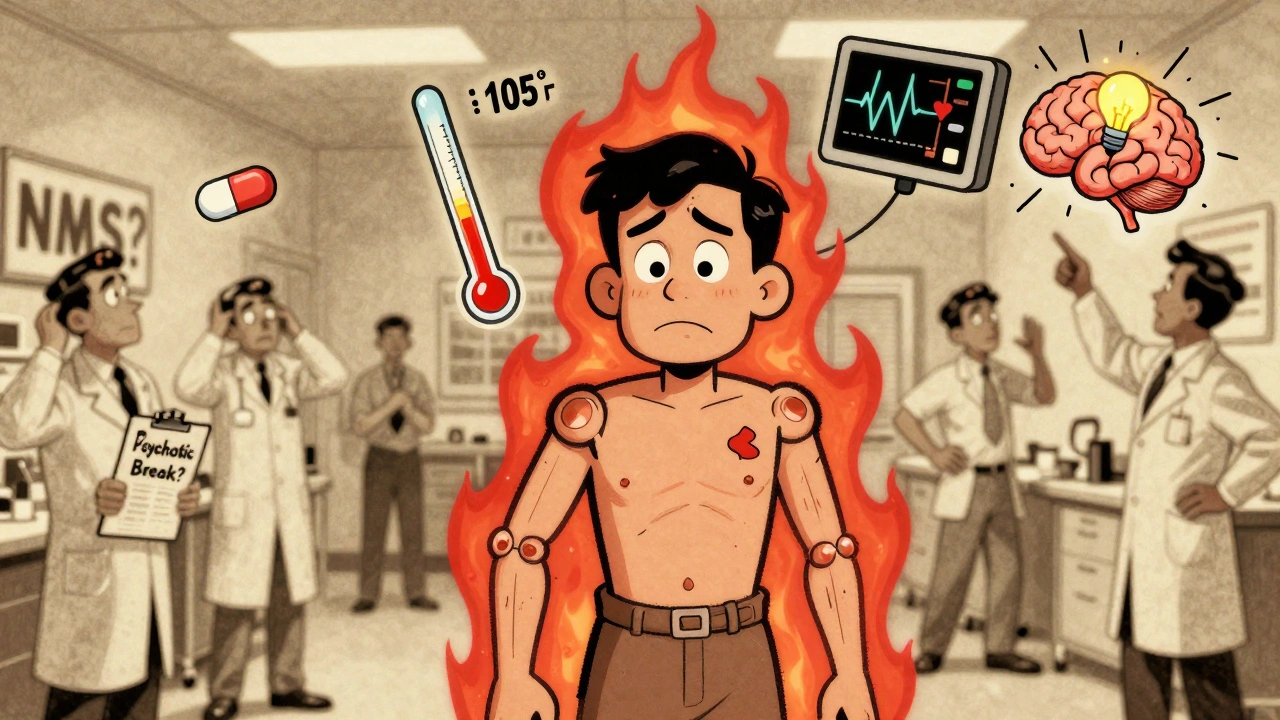
Neuroleptic Malignant Syndrome is a rare but life-threatening reaction to antipsychotics and other dopamine-blocking drugs. Recognizing its four key symptoms-rigidity, fever, mental changes, and autonomic instability-can save lives.
full article