When your liver gets hurt because of a medication, that’s called drug-induced liver injury, liver damage caused by prescription drugs, over-the-counter meds, or supplements. Also known as drug-induced hepatotoxicity, it’s not rare—and it doesn’t always come from illegal or experimental substances. Even common painkillers like acetaminophen can trigger it if taken too long or too hard. Your liver breaks down everything you swallow, but sometimes it gets overwhelmed. That’s when toxins build up, cells die, and inflammation starts. It’s silent at first. No pain. No fever. Just rising liver enzymes in a blood test—often found by accident.
Some drugs are known offenders: antibiotics like amoxicillin-clavulanate, antiseizure meds like valproate, statins for cholesterol, and even some herbal supplements sold as "natural." drug interactions, when two or more meds clash and overload the liver’s detox system are a big part of the problem. Take warfarin with an antibiotic? That combo can spike INR and stress the liver. Mix alcohol with acetaminophen? That’s a one-way ticket to liver damage. And hepatotoxicity, the technical term for liver poisoning from chemicals or drugs doesn’t care if you’re young or healthy. Older adults, people with existing liver issues, or those on multiple meds are at higher risk.
It’s not always obvious. You might feel tired, lose your appetite, or notice your skin or eyes turning yellow. Sometimes, you just feel "off." That’s why doctors check liver enzymes before and during long-term treatment. If you’re on a new med and start feeling unusually drained, don’t brush it off. Stop the drug and call your doctor. Most cases reverse if caught early. But if you ignore it, you could end up with permanent scarring—or worse, liver failure.
The posts below dig into real cases and practical advice. You’ll find stories of people who developed liver problems from meds they thought were safe. You’ll learn which drugs are most likely to cause trouble, how to monitor your liver health, and what to do if you’re on multiple prescriptions. There’s no magic bullet, but awareness saves lives. Whether you’re managing chronic pain, depression, or diabetes, knowing how your meds affect your liver isn’t optional—it’s essential.
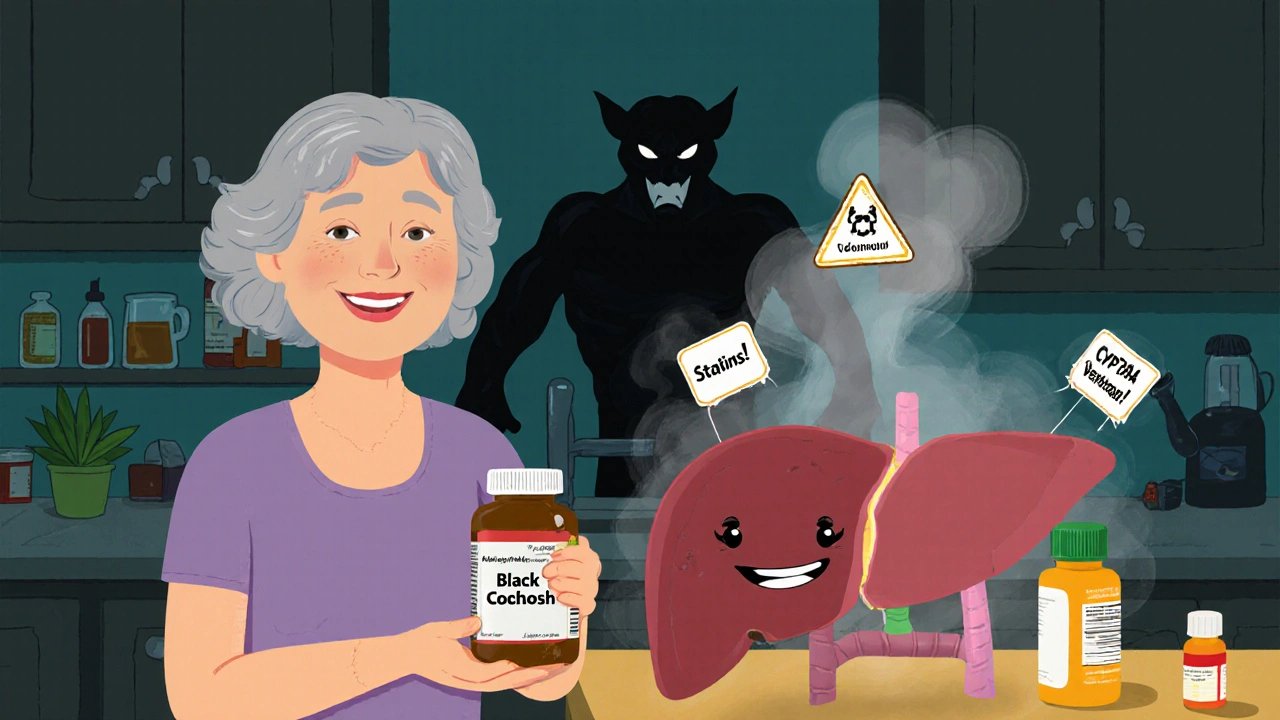
Black cohosh may help with menopause symptoms, but it carries a real risk of liver damage-especially when mixed with common medications like acetaminophen, statins, or antibiotics. Learn what you need to know before taking it.
full article