When you get a generic drug allergy, an immune response to inactive ingredients or fillers in generic medications that mimic the active drug of a brand-name version. Also known as medication hypersensitivity, it’s not the active ingredient causing the problem—it’s often the dyes, preservatives, or binders added during manufacturing. Many people assume generics are just copies of brand-name drugs, but they’re not identical in every way. The FDA requires them to have the same active ingredient, strength, and absorption rate—but the rest? That’s where differences start.
That’s why someone might react to a generic version of levothyroxine or metoprolol but not the brand. The bioequivalence, the scientific measure proving a generic drug performs the same as the brand in the body doesn’t cover everything. It doesn’t test for allergic reactions to fillers like lactose, corn starch, or FD&C dyes. And since generic manufacturers change suppliers frequently to cut costs, the same pill you took last month might have a different filler this month. That’s when people report rashes, swelling, or even anaphylaxis after switching to a cheaper version.
It’s not rare. A 2021 study tracking patients who switched from brand to generic thyroid meds found 12% reported new symptoms—some were allergic reactions, others were just sensitivity to new fillers. And if you’ve ever had a reaction to a generic antibiotic, antihypertensive, or antidepressant, you’re not alone. The drug allergy, a predictable immune response triggered by a medication, regardless of whether it’s generic or brand doesn’t care about price tags. It only cares about what’s in the pill.
Here’s the thing: if you’ve had a reaction to a brand-name drug, you’re more likely to react to its generic version—but not always. Sometimes the brand has a filler you tolerate, and the generic uses one you don’t. That’s why keeping a list of your medication ingredients matters. Check the package insert. Ask your pharmacist for the inactive ingredients. If you’re switching generics, don’t assume it’s safe just because it’s the same drug. Your body doesn’t see "generic"—it sees chemicals.
And it’s not just about pills. Generic creams, inhalers, and even liquid meds can carry the same risks. A patient allergic to propylene glycol in a generic asthma inhaler might think it’s the albuterol causing trouble—but it’s the solvent. Same with generic liquid antibiotics: the flavoring or preservative could be the trigger, not the antibiotic itself.
So what do you do? If you suspect a generic drug allergy, stop the medication and contact your doctor. Don’t just switch to another generic—ask for the brand, or ask your pharmacist to source a generic with different fillers. Some pharmacies can special-order versions with fewer additives. Others can tell you which manufacturers use corn-free or dye-free formulas. You don’t have to suffer through a rash or breathing trouble because a pill is cheaper.
The posts below cover real cases, hidden risks, and practical steps to avoid dangerous reactions. You’ll find stories from people who thought generics were safe, only to learn the hard way that the difference isn’t in the medicine—it’s in the stuff around it. We’ll show you how to spot risky fillers, how to talk to your pharmacist about alternatives, and why some people need to stick with brand-name drugs even when it costs more. This isn’t about fear. It’s about control. You deserve to know exactly what you’re putting in your body.
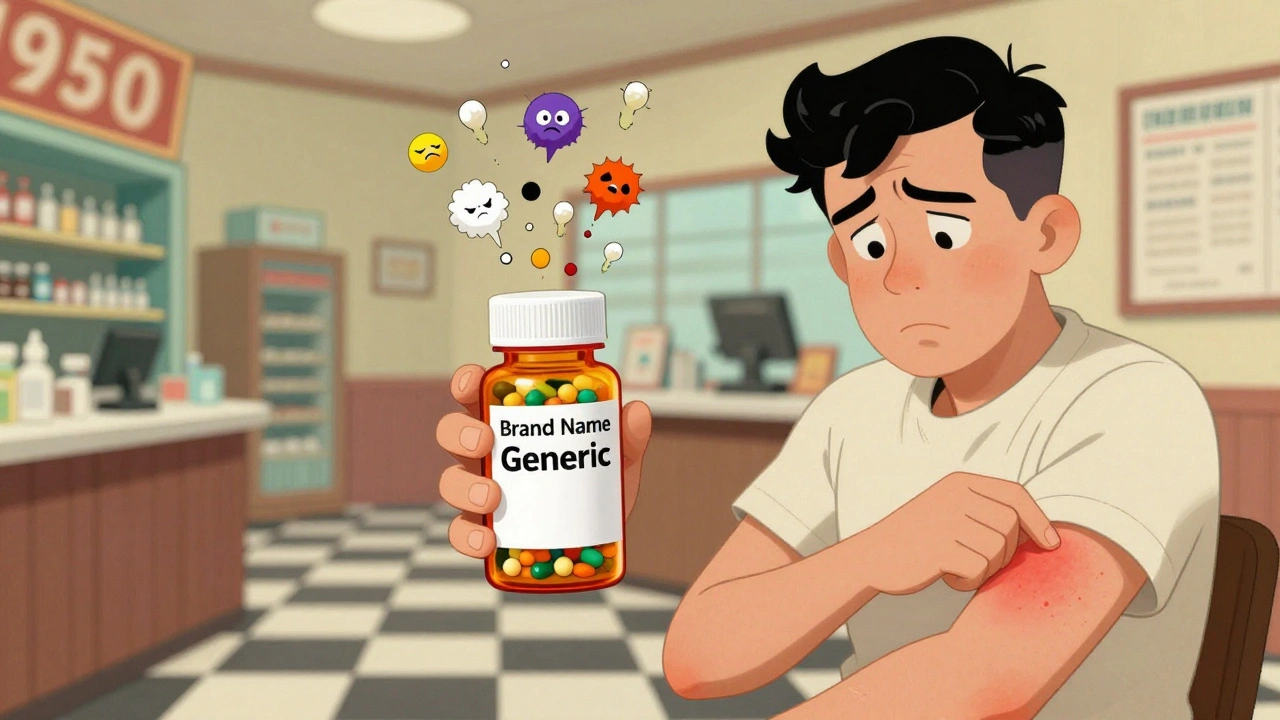
Generic medications can cause allergic reactions due to inactive ingredients like lactose, gluten, or dyes - not the active drug. Learn when to seek emergency care and how to avoid future reactions.
full article