When you reach for an herbal supplement, a plant-based product taken to support health, often sold without a prescription. Also known as natural products, it's easy to assume these are harmless because they come from nature. But herbal supplement safety isn’t about origin—it’s about what happens inside your body. Many people think "natural" means "safe," but that’s a dangerous myth. St. John’s wort, ginkgo biloba, echinacea—these aren’t just harmless teas. They’re powerful substances that can change how your body processes medications, trigger allergic reactions, or even damage your liver.
Take supplement interactions, the unintended and sometimes dangerous effects when herbal products mix with prescription drugs. For example, if you’re on warfarin for blood thinning, taking garlic or ginseng can spike your INR and cause uncontrolled bleeding. If you’re on antidepressants like Zoloft, St. John’s wort can trigger serotonin syndrome—a life-threatening surge in brain chemicals. These aren’t rare cases. They show up in ERs every week. And most people don’t even tell their doctor they’re taking them. Why? Because they assume it’s not "real medicine." But your body doesn’t care if it came from a lab or a leaf—it reacts the same way.
drug interactions, the way two or more substances affect each other’s effects in the body are the hidden risk behind herbal supplements. Unlike prescription drugs, supplements aren’t tested for safety before they hit shelves. The FDA doesn’t approve them for effectiveness or purity. That means what’s on the label? It might not match what’s inside. One batch of echinacea might have the right dose. The next might be filled with fillers, heavy metals, or even hidden pharmaceuticals. And if you’re older, on multiple meds, or have a chronic condition like diabetes or heart disease? You’re at higher risk. A simple supplement can turn a stable health situation into a crisis.
There’s no magic rule that says "all herbs are safe" or "all herbs are dangerous." But there is one rule that always applies: never assume safety without proof. If you’re thinking about trying an herbal supplement, ask yourself: What’s it for? Is there real evidence it works? And most importantly—what could it do to the meds I’m already taking? The posts below break down real cases where supplements clashed with prescriptions, caused liver damage, or masked serious conditions. You’ll see which herbs are most likely to cause trouble, how to spot warning signs, and what questions to ask your pharmacist before you buy. This isn’t about fear. It’s about control. You deserve to make informed choices—without guessing what’s in your body.
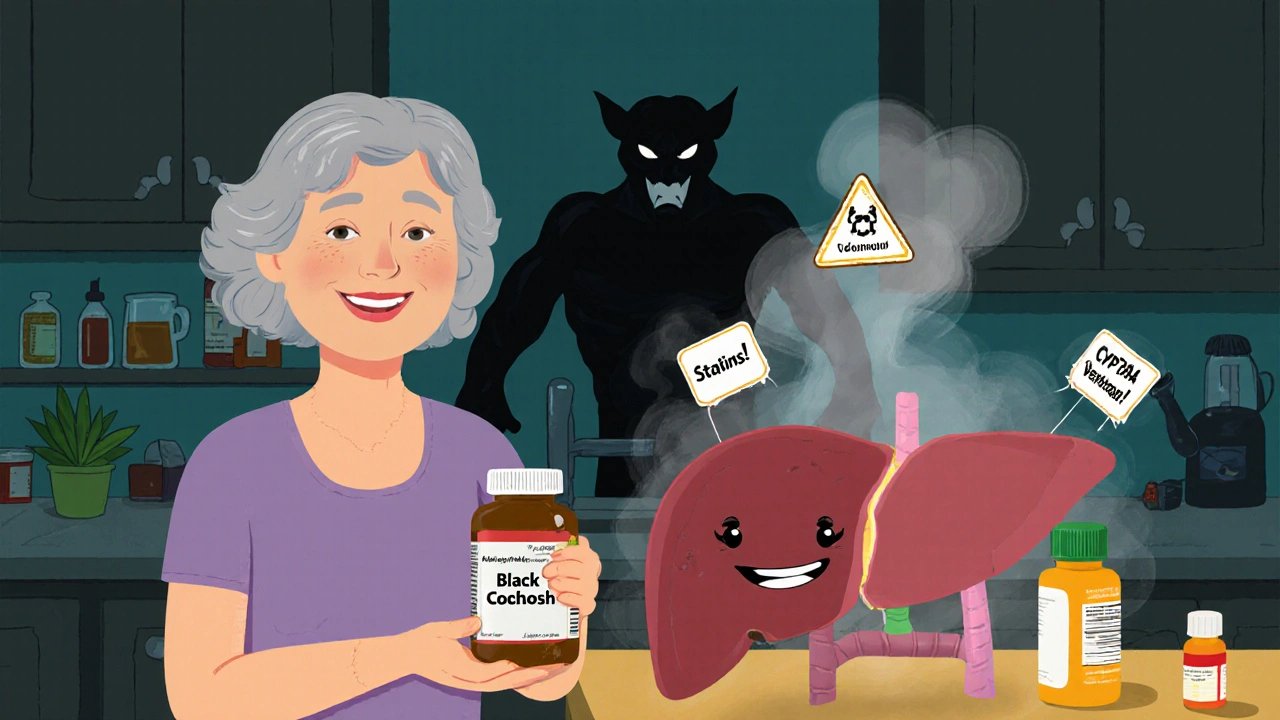
Black cohosh may help with menopause symptoms, but it carries a real risk of liver damage-especially when mixed with common medications like acetaminophen, statins, or antibiotics. Learn what you need to know before taking it.
full article