When you take a pill, most of it isn't the drug you're after—it's inactive ingredients, substances added to medicines to help with manufacturing, absorption, or stability, but that don't treat your condition. Also known as excipients, these include things like starch, lactose, dyes, and preservatives. They hold the pill together, help it dissolve at the right time, or make it easier to swallow. But just because they don't cure anything doesn't mean they're harmless.
Many people assume inactive ingredients are safe by default. But if you're allergic to lactose, gluten, or certain dyes like FD&C Red No. 40, those "fillers" can trigger reactions—from stomach pain to rashes or worse. Some people with celiac disease get sick from pills because of wheat-based starch. Others can't take certain generics because they contain a dye that causes hives. Even something as simple as a sugar coating can interfere with diabetes management. These aren't rare problems. In fact, studies show up to 1 in 5 people report side effects from inactive ingredients, not the active drug.
And it gets trickier. Inactive ingredients can change how your body absorbs the real medicine. A pill with one type of filler might release its drug too fast. Another might delay absorption, making it less effective. That’s why switching between generic brands sometimes causes unexpected changes in how you feel—even when the active ingredient is identical. The FDA says generics must be bioequivalent, but that doesn’t mean every version behaves the same in every body. If you’ve ever noticed a difference after switching pharmacies or brands, it might be the excipients.
Some inactive ingredients even interact with other drugs. For example, magnesium in supplements can block osteoporosis meds if taken too close together. Calcium carbonate in antacids can interfere with antibiotics. Even the alcohol in some liquid cough syrups can mix dangerously with other medications. These aren’t theoretical risks—they’re documented in real cases. The same goes for gelatin capsules, which can be a problem for vegans or people with religious dietary restrictions.
Knowing what’s in your meds isn’t just about avoiding allergies. It’s about making sure your treatment works as it should. That’s why you’ll find posts here covering how generic drugs differ in formulation, why some people react to certain fillers, and how drug interactions can hide in plain sight—like when a common preservative affects how your body breaks down another pill. You’ll also see how manufacturing quality, labeling, and even time zones can change how these invisible ingredients impact your health.
There’s no official public database that lists every inactive ingredient in every drug. Pharmacies rarely tell you unless you ask. But the more you know, the more control you have. Whether you’re managing a chronic condition, dealing with unexplained side effects, or just tired of guessing why a new pill makes you feel off, understanding inactive ingredients gives you the edge. Below, you’ll find real stories and science-backed insights into what’s really inside your medications—and what to do about it.
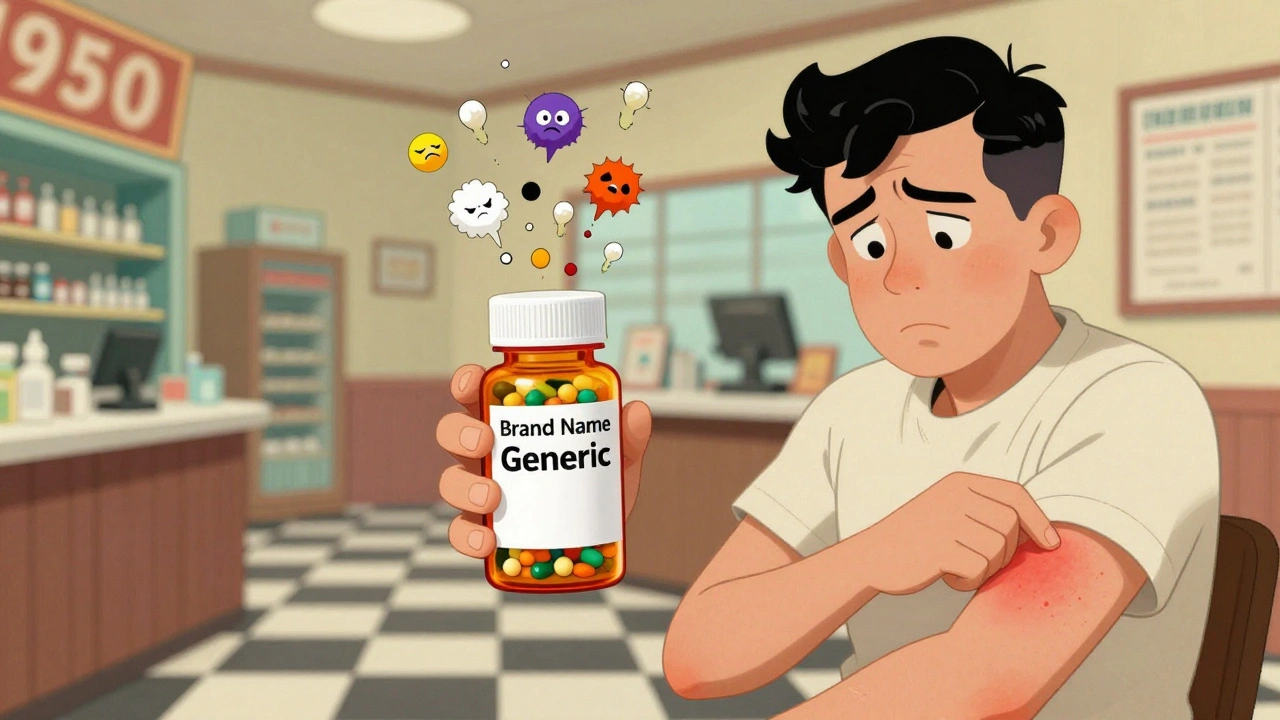
Generic medications can cause allergic reactions due to inactive ingredients like lactose, gluten, or dyes - not the active drug. Learn when to seek emergency care and how to avoid future reactions.
full article