When you’re fighting a stubborn bacterial infection that won’t respond to common antibiotics, linezolid, a synthetic antibiotic used for drug-resistant infections like MRSA and VRE. Also known as Zyvox, it’s one of the last-line treatments doctors turn to when other drugs fail. Unlike penicillin or cephalosporins, linezolid doesn’t attack bacteria by breaking down their cell walls. Instead, it stops them from making the proteins they need to survive. This unique method makes it effective against bugs that have grown immune to other antibiotics — especially dangerous ones like methicillin-resistant Staphylococcus aureus (MRSA) and vancomycin-resistant Enterococcus (VRE).
Linezolid isn’t just another pill. It’s a tool used in serious cases — hospital-acquired pneumonia, skin infections that won’t heal, or infections in people with weakened immune systems. But it’s not without risks. Because it affects how your body processes certain chemicals, it can interact dangerously with antidepressants like SSRIs and SNRIs, leading to a life-threatening condition called serotonin syndrome. That’s why you can’t just pick it up over the counter. Your doctor needs to know every medication you’re taking — even herbal supplements or OTC cold remedies.
It also affects your bone marrow. Long-term use can lower your red blood cells, white blood cells, or platelets. That’s why regular blood tests are part of the treatment. If you start feeling unusually tired, bruise easily, or get sick more often, tell your doctor. Linezolid is usually given for 10 to 28 days, depending on the infection. Taking it longer than needed increases side effects without added benefit.
There’s another hidden layer to linezolid: its role in the bigger fight against antibiotic resistance. As more bacteria evolve to survive common drugs, linezolid becomes more valuable — and more vulnerable. Overuse or misuse could make it useless too. That’s why it’s reserved for cases where no other option works. It’s not a first choice. It’s a backup plan. And when used right, it saves lives.
You’ll find posts here that dig into how linezolid fits into the larger world of antibiotics — from how it compares to other last-resort drugs, to the real risks of mixing it with common meds like decongestants or migraine treatments. You’ll also see how drug interactions with linezolid are monitored in real clinics, what patients report after weeks of use, and why some people need to avoid it entirely because of thyroid issues or high blood pressure. This isn’t just about the drug itself. It’s about understanding when it’s needed, how to use it safely, and what happens when things go wrong.
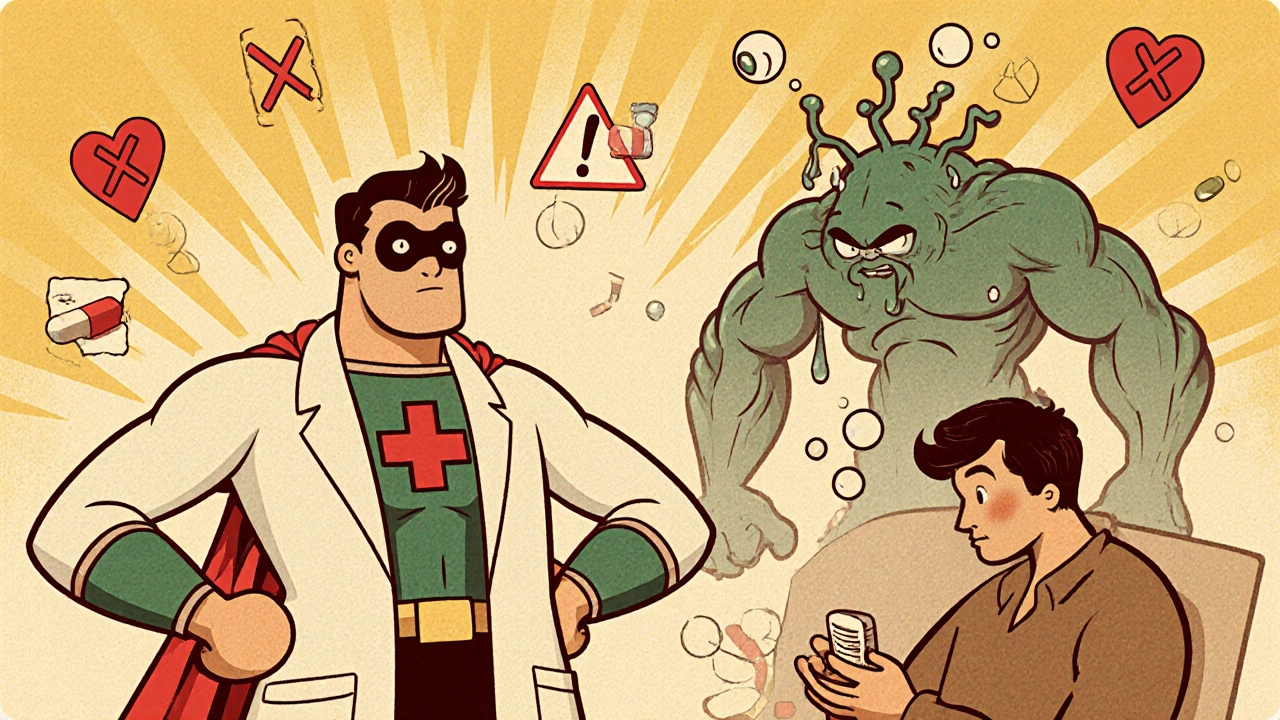
Linezolid and antidepressants together carry a low risk of serotonin syndrome-less than 0.5%. New studies show the danger is overblown. Here’s what you really need to know before taking both.
full article