When a drug triggers a sudden, dangerous drop in white blood cells, it’s called medication-induced agranulocytosis, a life-threatening condition where the body stops producing enough neutrophils to fight infection. Also known as drug-induced neutropenia, it doesn’t happen often—but when it does, it can turn a simple cold into a hospital emergency.
This isn’t just about one drug. It’s linked to several common prescriptions, including antithyroid drugs, like methimazole and propylthiouracil, used to treat overactive thyroid, and clozapine, an antipsychotic for treatment-resistant schizophrenia. Even some antibiotics, anti-seizure meds, and arthritis drugs can cause it. The risk isn’t high for most people, but if your body reacts badly, your neutrophil count can crash in days. No warning. No slow build-up. Just a sudden vulnerability to infection.
What makes this worse is how easy it is to miss. Early signs look like the flu: fever, sore throat, mouth ulcers, fatigue. People assume it’s a virus and keep going—until they get sepsis. That’s why doctors monitor blood counts for patients on high-risk drugs. If you’re on clozapine or an antithyroid medication, regular blood tests aren’t optional. They’re your safety net.
You might wonder why these drugs even get approved if they can do this. The answer: the benefits often outweigh the risks—for the right person. Clozapine works when nothing else does. Antithyroid drugs can control hyperthyroidism without surgery. But that balance only holds if you’re watched closely. Skipping blood tests, ignoring symptoms, or not telling your doctor about new meds you’ve started? That’s when things go wrong.
It’s not just about the drug itself. Interactions matter. Taking an antibiotic while on clozapine? That can spike your risk. Even herbal supplements like black cohosh—mentioned in other posts here—can mess with your liver and immune response, making you more vulnerable. Your body doesn’t see drugs as separate. It sees combinations. And sometimes, those combinations trigger reactions no one predicted.
There’s no cure for medication-induced agranulocytosis other than stopping the drug—and acting fast. Once it’s caught, recovery is usually quick with proper care. But delay, and it turns deadly. That’s why awareness isn’t just medical knowledge. It’s survival.
Below, you’ll find real-world examples of how drugs interact with your immune system, what symptoms to never ignore, and which medications carry the highest risk. These aren’t theoretical warnings. They’re stories from patients who caught it early—and those who didn’t.
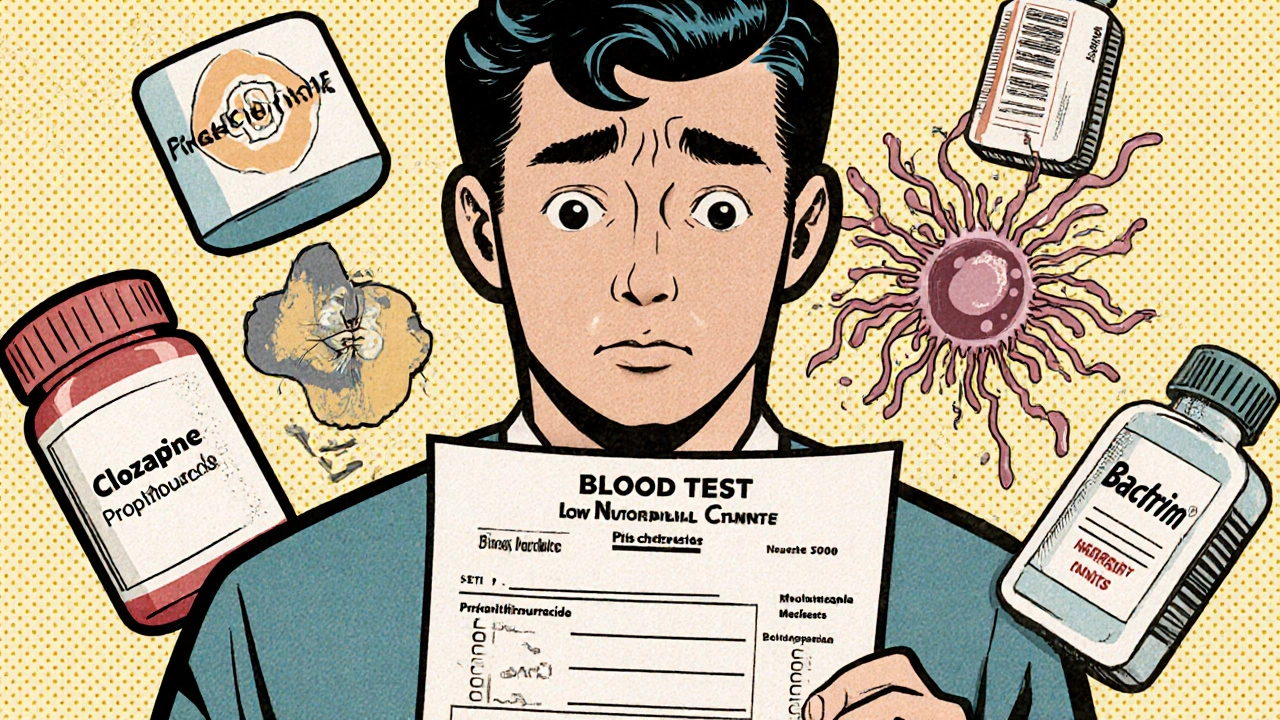
Medication-induced agranulocytosis is a rare but deadly drop in white blood cells that can lead to fatal infections. Learn which drugs cause it, how to monitor for it, and what to do if symptoms appear.
full article