When your body responds badly to a drug, it’s not always about the active ingredient. A medication reaction, an unintended response to a drug that can be harmless or deadly. Also known as adverse drug reaction, it’s one of the most common reasons people end up in the ER—not because they took too much, but because their body didn’t handle it right. This isn’t just about allergies. It’s about how your liver processes drugs, how other meds you’re taking interfere, and even what’s in the pill you didn’t think mattered—like the dye or lactose in a generic version.
Some drug interactions, when two or more medications affect each other’s behavior in your body can turn a safe combo into a danger zone. Take colchicine and clarithromycin together? That’s a recipe for toxic buildup. Mix NSAIDs with fluoroquinolones? You might miss the warning signs of a tendon tear until it’s too late. And then there’s allergic reaction to medication, a false alarm from your immune system triggered by inactive ingredients like gluten or dyes—not the drug itself. That’s why a generic version of your old pill can suddenly cause a rash or swelling, even if you’ve taken it safely for years.
These reactions don’t happen randomly. They’re tied to age, other health conditions, and how many pills you’re taking at once. polypharmacy, taking five or more medications daily doubles your risk of something going wrong. It’s not the drugs themselves—it’s the way they stack up. Your kidneys slow down. Your liver gets overloaded. One drug hides the symptoms of another. A simple dose of Benadryl for your kid? Wrong weight calculation and you’re looking at seizures. Magnesium with your osteoporosis pill? Take them too close and your bone treatment fails.
And it’s not just prescription drugs. Supplements like black cohosh can wreck your liver when mixed with statins. Even antivirals and antibiotics can team up to create resistance—or worse, trigger a rare but deadly drop in white blood cells. The real problem? Most people don’t know what to watch for. Dizziness isn’t just "getting old." A sudden fever after starting a new pill isn’t "just a cold." A tingling tongue after swallowing a generic could mean anaphylaxis is coming.
What you’ll find below isn’t a list of scary stories. It’s a practical guide to what actually happens when your body reacts to medicine—why it happens, who’s most at risk, and what you can do right now to protect yourself. From timing your pills correctly across time zones to spotting the hidden dangers in your medicine cabinet, these posts cut through the noise. No fluff. No guesswork. Just clear, real-world info that helps you take control before the next reaction hits.
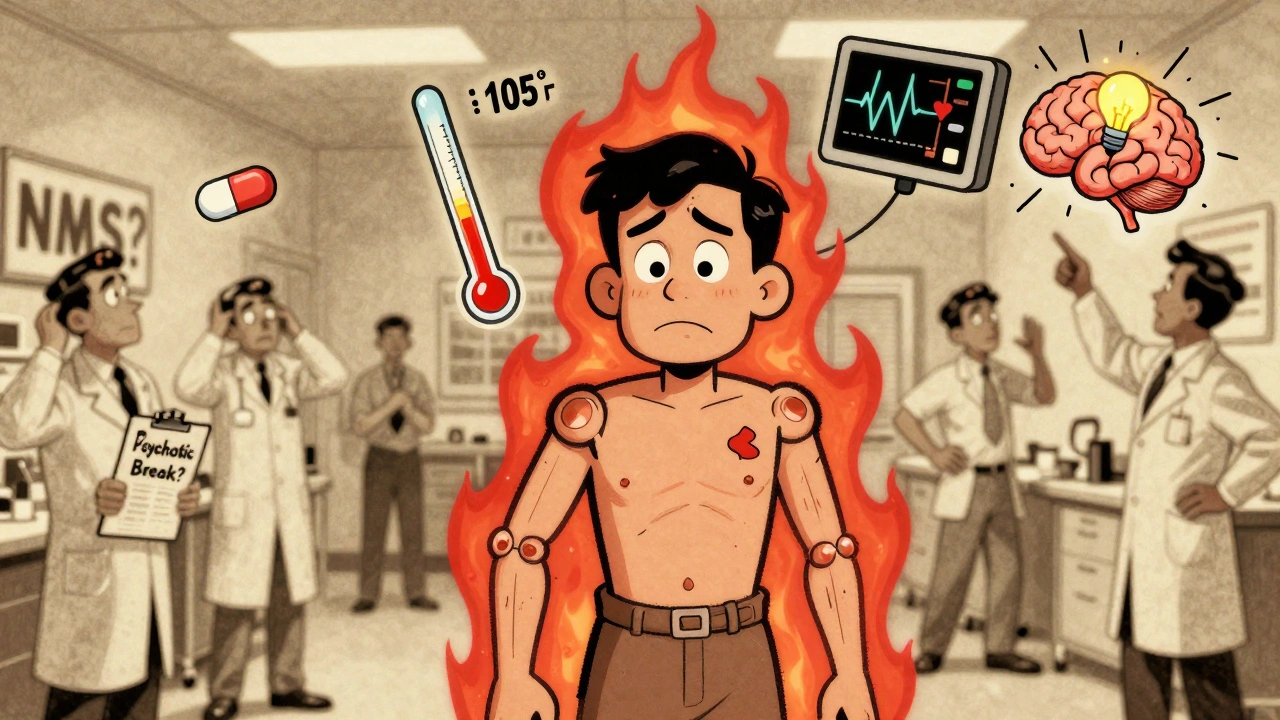
Neuroleptic Malignant Syndrome is a rare but life-threatening reaction to antipsychotics and other dopamine-blocking drugs. Recognizing its four key symptoms-rigidity, fever, mental changes, and autonomic instability-can save lives.
full article