When your body starts shifting through menopause, menopause supplements, natural products used to ease symptoms like hot flashes, night sweats, and mood changes. Also known as hormone-supporting herbs, these are often the first thing women turn to when they want to avoid prescription hormones. But not all supplements do what they claim. Some help—others are just expensive placebo. The truth? Your body’s drop in estrogen affects more than just temperature control. It hits your bones, your brain, your sleep, and even your heart. That’s why smart choices matter.
Many women try black cohosh, a herbal remedy long used for hot flashes and mood swings. Studies show it might help a bit for some, but not everyone. Others reach for red clover, a plant with compounds that mimic estrogen. It sounds promising, but it can interfere with thyroid meds and blood thinners. Then there’s vitamin D, a critical nutrient many postmenopausal women are dangerously low in. Low vitamin D isn’t just about weak bones—it’s tied to fatigue, depression, and even worse hot flashes. And don’t forget magnesium, a mineral that helps with sleep, muscle cramps, and anxiety. It’s cheap, safe, and backed by real data.
Here’s the catch: natural doesn’t mean harmless. herbal remedies, including soy isoflavones and dong quai, can mess with liver enzymes or interact with thyroid meds, antidepressants, or blood pressure pills. One woman in her 50s we talked to took a popular menopause blend and ended up with a spike in her INR—same risk you see with warfarin and antibiotics. No one warned her. Supplements aren’t regulated like drugs. Labels lie. Doses vary. And if you’re taking anything else, you’re playing Russian roulette with your health.
What you need isn’t another miracle pill. It’s clarity. You’ll find real comparisons in the posts below—what actually reduces hot flashes, what’s just hype, and which combinations can be dangerous. Some articles dig into how certain herbs affect serotonin levels, others show why calcium alone won’t protect your spine. You’ll see why some women swear by evening primrose oil while others get worse symptoms. And you’ll learn how to spot a supplement that’s been tested versus one that’s just got a pretty bottle.
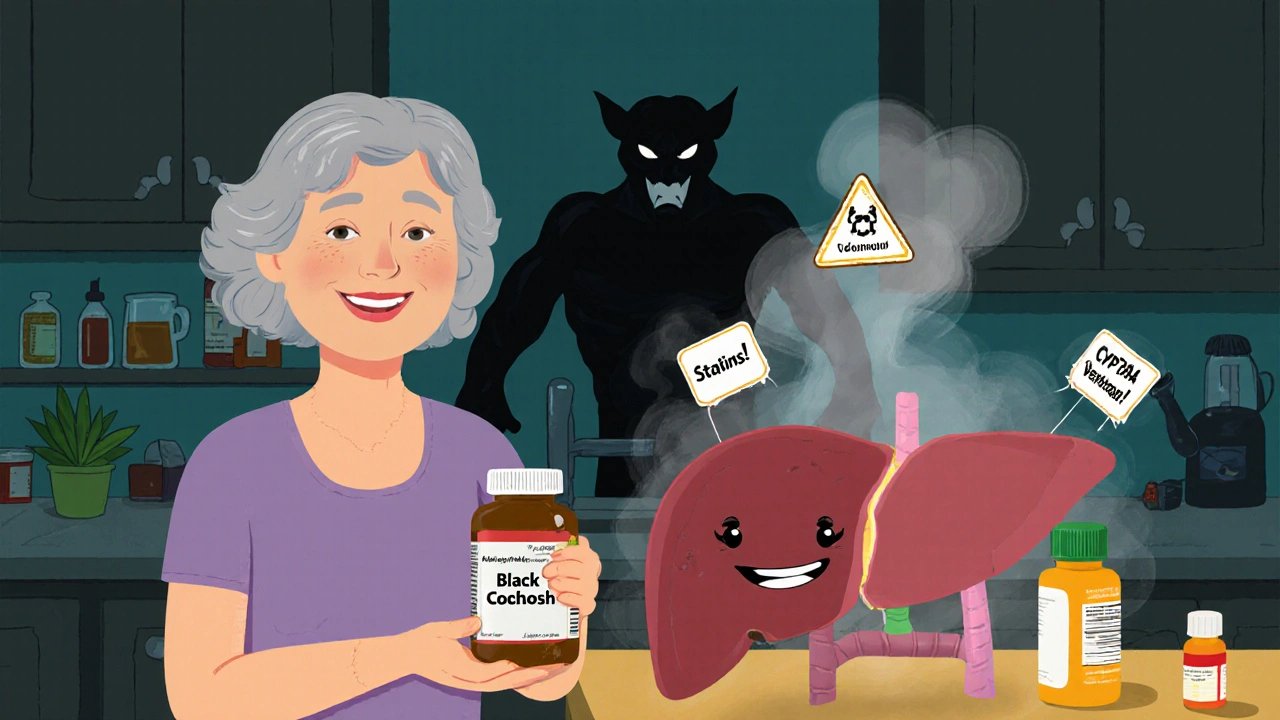
Black cohosh may help with menopause symptoms, but it carries a real risk of liver damage-especially when mixed with common medications like acetaminophen, statins, or antibiotics. Learn what you need to know before taking it.
full article