When you’re taking multiple medications, the use of two or more drugs at the same time, often for different conditions. Also known as polypharmacy, it’s common among older adults and people with chronic illnesses—but it’s not harmless. Every pill you swallow doesn’t just work on its own. It talks to the others. Sometimes that conversation is helpful. Other times, it turns deadly.
Take colchicine, a drug used for gout and other inflammatory conditions and macrolide antibiotics, like clarithromycin, often prescribed for respiratory infections. Together, they can spike colchicine levels in your blood to toxic levels, causing muscle damage, kidney failure, or even death. This isn’t a rare case—it’s a well-documented interaction that doctors sometimes miss because they’re focused on treating one condition at a time.
It’s not just prescription drugs. generic medications, cheaper versions of brand-name drugs that contain the same active ingredient can still cause problems. Their inactive ingredients—like lactose, gluten, or food dyes—can trigger allergic reactions in people who think they’re safe because the active drug is the same. And if you’re taking osteoporosis medications, like Fosamax, that need to be taken on an empty stomach, a magnesium supplement taken too close by can block absorption and make your treatment useless.
Even something as simple as timing matters. If you’re on blood thinners like warfarin, your INR levels need constant monitoring because antibiotics, supplements, or even a change in your diet can throw them off. Same with antivirals and antimalarials—miss a dose because you lost track of time zones, and you risk treatment failure or drug-resistant infections.
And here’s the thing: most people don’t know what’s in their medicine cabinet. A study from the CDC found that nearly 4 in 10 adults take five or more medications daily. Many don’t realize their painkiller might be making their heart medication less effective. Or that their herbal supplement for sleep could be raising their risk of liver damage when mixed with statins or acetaminophen.
The real danger isn’t the number of pills—it’s the lack of coordination. Doctors focus on their specialty. Pharmacists fill the script. You take what’s handed to you. But no one is looking at the full picture. That’s why knowing the basics of drug interactions isn’t just helpful—it’s essential.
You don’t need to be a scientist to protect yourself. Start by keeping a written list of everything you take—prescriptions, supplements, even over-the-counter stuff. Bring it to every appointment. Ask: "Could this interact with anything else I’m taking?" And if you’re told "it’s fine," push back. Ask for the evidence. Some interactions are well-known. Others are hidden in fine print.
Below, you’ll find real cases—like how fluoroquinolones and NSAIDs can hide tendon rupture warnings, or why mixing benzodiazepines with opioids can stop your breathing. These aren’t theoretical risks. They’re documented, preventable, and happening right now. The goal isn’t to scare you. It’s to give you the tools to ask the right questions before the next prescription comes in.
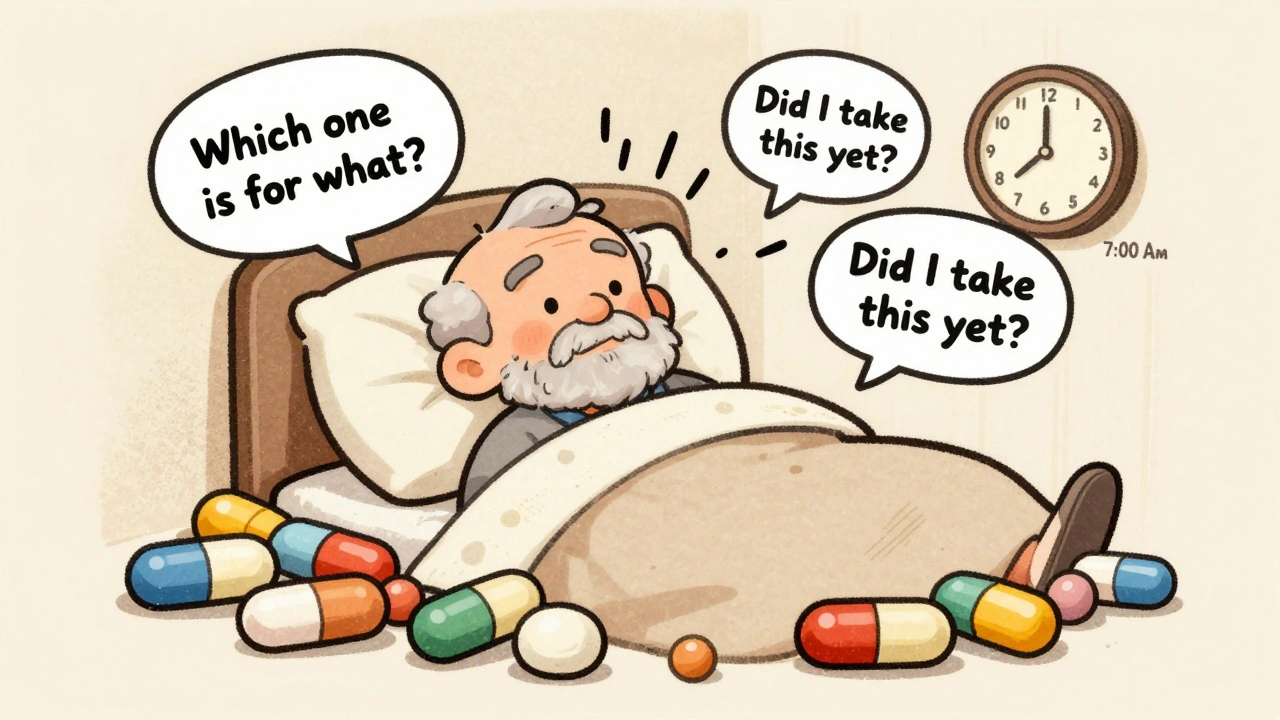
Taking five or more medications increases your risk of side effects, falls, hospital stays, and even death. Learn how polypharmacy works, why it's dangerous, and what you can do to stay safe.
full article