When your doctor talks about your neutrophil count, a type of white blood cell that’s your body’s first line of defense against bacterial infections. Also known as absolute neutrophil count, it’s one of the most important numbers in a routine blood test because it shows how ready your immune system is to fight off invaders. If your neutrophil count is low, even a simple cold can turn serious. If it’s high, your body is likely fighting something—maybe an infection, inflammation, or even a reaction to medication.
Neutrophils make up about 50% to 70% of your white blood cells. They rush to sites of injury or infection like emergency responders, swallowing up bacteria and dead cells. A normal range is usually between 1,500 and 8,000 cells per microliter. But numbers alone don’t tell the whole story. A count below 1,500 is called neutropenia, and below 500 is considered severe. People with low neutrophils are more likely to get infections from things most people handle easily—like a cut on the finger or a dental cleaning. On the flip side, a high neutrophil count often means your body is under stress: from an active infection, physical trauma, or even certain cancer treatments.
Many of the conditions covered in our posts relate directly to neutrophil changes. For example, antibiotics, medications used to kill bacteria can sometimes lower neutrophil counts as a side effect, especially with long-term use. That’s why antibiotics & warfarin discussions often include blood monitoring—not just for clotting, but for overall immune health. Similarly, chemotherapy, a cancer treatment that targets fast-growing cells doesn’t just hit tumors—it wipes out bone marrow cells, including neutrophils. That’s why patients on drugs like alpelisib, a targeted therapy for breast cancer need regular blood tests. Even stress, poor nutrition, or autoimmune diseases like ankylosing spondylitis, a chronic inflammatory condition affecting the spine can throw off your neutrophil levels.
You won’t feel low neutrophils until you get sick—but catching them early can prevent hospital visits. If you’re on medications that affect your immune system, or if you’ve had recent infections, your neutrophil count is a silent warning sign. It’s not just a number on a lab sheet; it’s your body’s way of saying, "I need help."
Below, you’ll find real-world guides that connect neutrophil changes to everyday health decisions—from understanding why your doctor orders a blood test after starting a new drug, to knowing when a low count means you should delay a dental procedure. These aren’t theoretical discussions. They’re based on what people actually experience when their immune system is under pressure.
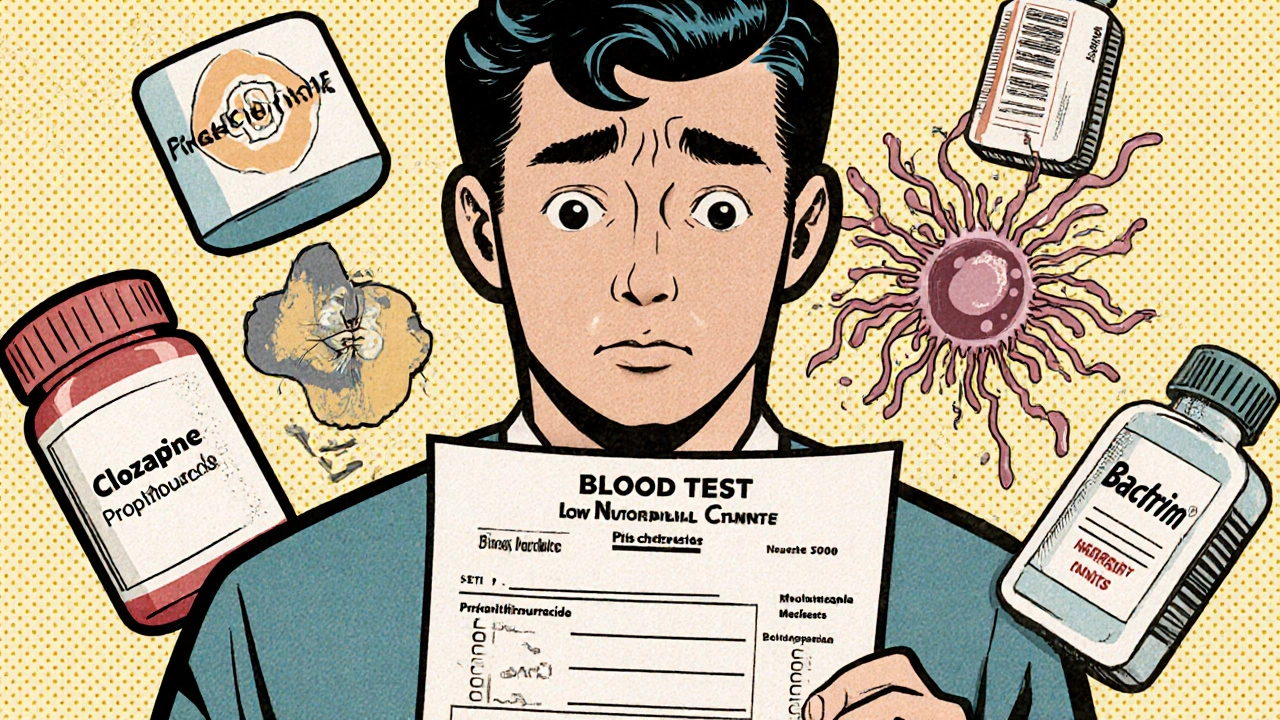
Medication-induced agranulocytosis is a rare but deadly drop in white blood cells that can lead to fatal infections. Learn which drugs cause it, how to monitor for it, and what to do if symptoms appear.
full article