When NMS, neuroleptic malignant syndrome, a rare but deadly reaction to certain psychiatric and anti-nausea drugs. Also known as neuroleptic malignant syndrome, it can strike within days of starting or changing medication and needs immediate medical care. It’s not just another side effect—it’s a full-body crisis that starts with muscle stiffness, high fever, and confusion, then can spiral into kidney failure or death if missed.
NMS usually happens with antipsychotics, medications used to treat schizophrenia, bipolar disorder, and severe nausea, but it can also come from stopping anti-Parkinson’s drugs like levodopa or mixing certain pain and anti-nausea pills. The real danger isn’t the drug itself—it’s how it blocks dopamine in the brain and muscles, triggering a runaway stress response. Even a small dose change, like switching from one antipsychotic to another, can be enough to trigger it. People on high doses, those who are dehydrated, or those with existing movement disorders are at higher risk. And here’s the twist: drug interactions, when two or more medications combine to create unexpected and dangerous effects often hide in plain sight. For example, combining an antipsychotic with a strong anti-nausea drug like metoclopramide can double the risk.
What makes NMS tricky is that it looks like other things—flu, heatstroke, even a panic attack. But if you’re on an antipsychotic and suddenly can’t move your arms, your temperature spikes past 102°F, or your muscles feel locked up, don’t wait. Call 911. Emergency treatment means stopping the trigger drug, cooling the body, and giving fluids and sometimes dopamine-boosting meds. Many patients recover fully if caught early, but delays can be fatal. This isn’t about scaring you—it’s about giving you the facts so you can spot the warning signs before it’s too late.
The posts below cover real-world cases where NMS was missed, misunderstood, or prevented. You’ll find what drugs are most likely to cause it, how doctors test for it, why some patients react while others don’t, and how to talk to your pharmacist about safer alternatives. You’ll also learn about the hidden connections between NMS and other serious reactions like serotonin syndrome, and why timing and dosage matter more than most people realize. This isn’t theoretical—it’s life-saving knowledge, written for people who take these meds, care for someone who does, or just want to understand what’s really going on inside their body.
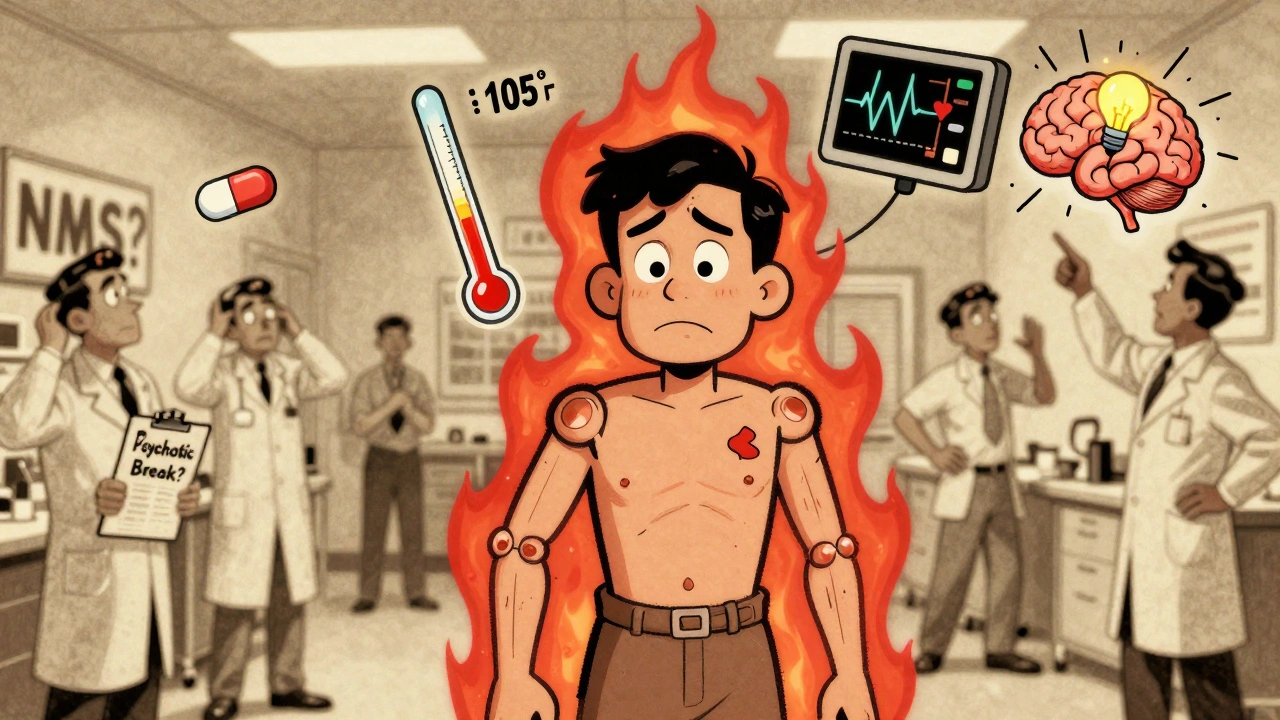
Neuroleptic Malignant Syndrome is a rare but life-threatening reaction to antipsychotics and other dopamine-blocking drugs. Recognizing its four key symptoms-rigidity, fever, mental changes, and autonomic instability-can save lives.
full article