When you take a pill, it doesn’t just disappear into your bloodstream. P-gp inhibition, the process where certain substances block the P-glycoprotein transporter that pushes drugs out of cells. Also known as P-glycoprotein inhibition, it’s a silent player in how well your meds get absorbed—or blocked entirely. This transporter, found in your gut, liver, kidneys, and even the blood-brain barrier, acts like a bouncer. It kicks out toxins and excess drugs to protect your body. But when something inhibits it, those drugs stick around longer, build up, and can cause side effects you didn’t expect.
Many common medications and even some supplements can trigger P-gp inhibition. Grapefruit juice is the most famous example—it’s not just a breakfast drink, it’s a potent inhibitor that can make blood pressure meds, statins, or immunosuppressants dangerously strong. Other culprits include certain antibiotics like clarithromycin, antifungals like ketoconazole, and even some herbal products like St. John’s wort. When these mix with drugs that rely on P-gp to move through your system, the result isn’t just stronger effects—it can be toxicity, organ damage, or even life-threatening reactions. This isn’t theory. Real cases show people ending up in the ER after combining common OTC supplements with prescription drugs, all because P-gp got shut down.
It’s not just about what you take—it’s about what your body can’t get rid of. If you’re on a drug like digoxin, cyclosporine, or some cancer therapies, even small changes in P-gp activity can shift your treatment from effective to dangerous. That’s why doctors need to know every pill, powder, and potion you’re using. And if you’re taking five or more medications—something we see in polypharmacy cases—it gets even trickier. One drug might inhibit P-gp, another might be affected by it, and a third might alter how your liver processes everything. It’s a chain reaction, and your body doesn’t have a manual for it.
You don’t need to be a pharmacist to protect yourself. Just ask: Could this new supplement or antibiotic be changing how my other meds work? If you’ve noticed new dizziness, nausea, or unusual fatigue after starting something new, it might not be the drug itself—it could be what it’s blocking. Drug interactions like these don’t always show up on standard lab tests. They hide in plain sight, in the timing of your doses, in the combo you didn’t think mattered. And when you’re managing something like medication absorption for chronic illness, even a 10% change in how much drug enters your blood can mean the difference between control and crisis.
What you’ll find below are real cases where P-gp inhibition made the difference—sometimes saving lives, sometimes causing harm. From how antifungals boost blood levels of antidepressants, to why your blood thinner stopped working after you started taking a new supplement, these stories aren’t hypothetical. They’re from patients who didn’t know to ask. You will.
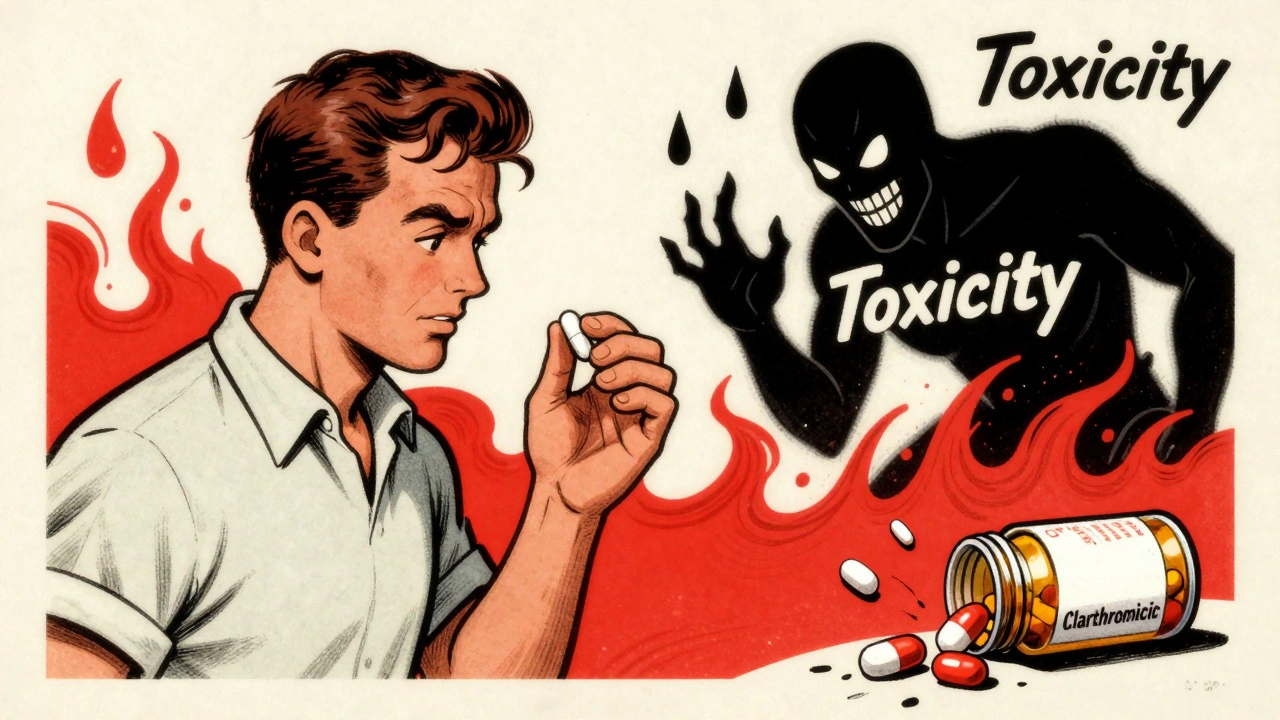
Colchicine and macrolides like clarithromycin can cause deadly toxicity when taken together due to CYP3A4 and P-gp inhibition. Learn how this interaction works, which antibiotics are safe, and what to do if you're on both.
full article