When you take phenytoin, an anticonvulsant used to control seizures and prevent epileptic episodes. Also known as Dilantin, it works by calming overactive nerve cells in the brain. But if you're also on a blood thinner like warfarin, phenytoin can mess with your INR, a measure of how long it takes your blood to clot, used to monitor anticoagulant therapy. This isn’t just a footnote—it’s a real risk that can lead to clots, strokes, or dangerous bleeding if not tracked closely.
Phenytoin speeds up how your liver breaks down warfarin. That means warfarin leaves your body faster, and your INR drops. A lower INR means your blood isn’t thin enough, raising your risk of clots. Some people see their INR fall by 30% or more after starting phenytoin. And it doesn’t happen right away—it can take days or weeks. That’s why doctors don’t just check your INR once when you start phenytoin. They check it again a week later, then every few days until it stabilizes. If you’re on both drugs, you need to know your INR target range and what numbers mean. Too low? Your risk of stroke goes up. Too high? You could bleed internally without warning.
This interaction doesn’t just affect warfarin. Phenytoin can also mess with other drugs that rely on the same liver enzymes—like some antibiotics, antidepressants, and even certain supplements. That’s why polypharmacy is so dangerous. Taking five or more meds increases your chance of hidden interactions. And if you’re older, have liver problems, or take other seizure drugs, your body handles phenytoin differently. You might need a lower dose, or your INR might swing even more. The key isn’t avoiding phenytoin—it’s monitoring. Regular blood tests, clear communication with your pharmacist, and tracking symptoms like unusual bruising, headaches, or shortness of breath can catch problems early.
What you’ll find below are real stories and facts from people who’ve been through this. Posts that explain how phenytoin changes INR levels, why some patients need more frequent blood tests, and what alternatives exist if the interaction becomes too risky. You’ll also see how other drugs like antibiotics or antifungals can make things worse—or sometimes help. This isn’t theory. It’s what happens in clinics, emergency rooms, and homes every day. And if you’re taking phenytoin and warfarin together, you need to know it.
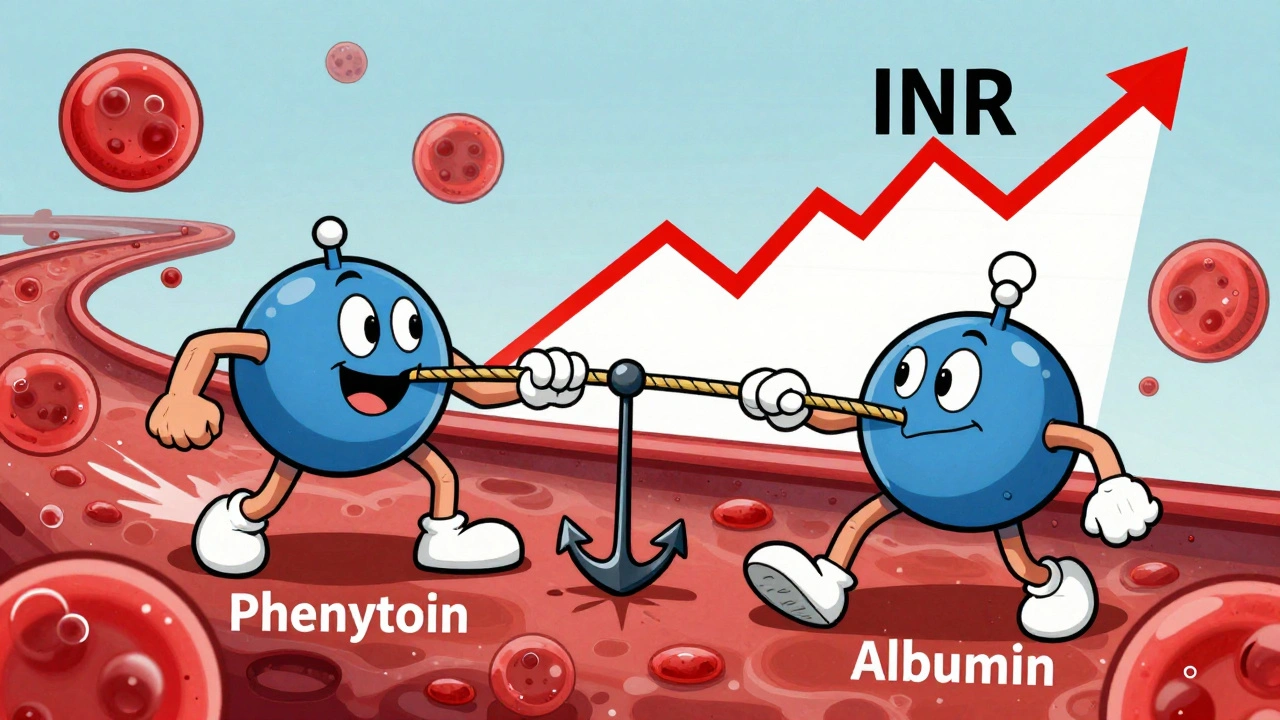
Phenytoin and warfarin interact in two phases: an early spike in INR from protein displacement, followed by a dangerous drop due to enzyme induction. This requires close INR monitoring and careful dose adjustments to avoid bleeding or clotting.
full article