When you take phenytoin, an antiseizure medication used to control epilepsy and certain types of nerve pain. Also known as Dilantin, it works by calming overactive brain signals. alongside warfarin, a blood thinner prescribed to prevent clots in people with atrial fibrillation, artificial heart valves, or a history of deep vein thrombosis. you’re walking a tightrope. These two drugs don’t just coexist—they actively interfere with each other. Phenytoin speeds up how your liver breaks down warfarin, which can cause your blood to clot faster than it should. That’s not a minor concern. A sudden drop in warfarin’s effect can lead to stroke or pulmonary embolism.
This interaction isn’t theoretical. Studies show phenytoin can reduce warfarin levels by up to 40% within days of starting treatment. Your INR, a lab test that measures how long it takes your blood to clot, used to monitor warfarin therapy. might swing from a safe 2.5 down to 1.2—well below the target range. And here’s the catch: you won’t feel it happening. No dizziness, no pain, no warning signs. That’s why regular INR checks aren’t optional—they’re life-saving. If you’re on both drugs, your doctor should test your INR within 3–5 days after starting or stopping phenytoin, then weekly until it stabilizes. Even small changes in phenytoin dose can throw off your warfarin levels, so never adjust either without medical guidance.
It’s not just phenytoin. Other seizure meds like carbamazepine and phenobarbital do the same thing. But phenytoin is especially tricky because its own levels vary wildly between people, and even small changes in diet, alcohol use, or other medications can shift how it interacts with warfarin. That’s why some patients need frequent blood tests for months after starting the combo. If you’re on warfarin and your doctor adds phenytoin, ask for a clear plan: when to test INR, what numbers to watch for, and what symptoms mean danger—like unusual bruising, dark urine, or sudden headaches. Don’t assume your pharmacist or doctor will bring it up. Take charge. The phenytoin warfarin interaction is one of the most dangerous in common use, but it’s manageable if you’re informed.
What you’ll find below are real, practical posts that dig into how drug interactions like this happen, how to spot them before they hurt you, and what to do when your meds don’t play nice. From how INR monitoring keeps you safe, to why taking too many pills increases your risk, to how generics can sometimes surprise you—this collection gives you the tools to speak up, ask the right questions, and protect yourself.
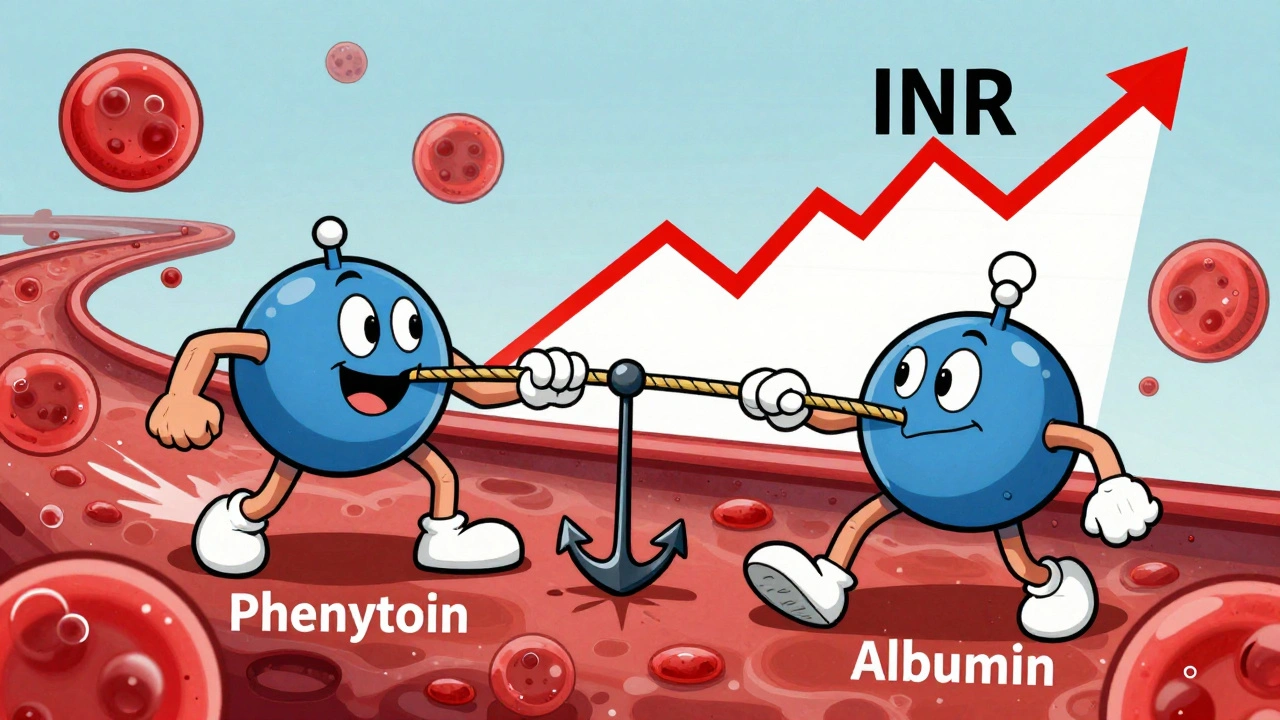
Phenytoin and warfarin interact in two phases: an early spike in INR from protein displacement, followed by a dangerous drop due to enzyme induction. This requires close INR monitoring and careful dose adjustments to avoid bleeding or clotting.
full article