When you take warfarin, a blood thinner used to prevent dangerous clots in people with atrial fibrillation, artificial heart valves, or a history of deep vein thrombosis. Also known as Coumadin, it works by blocking vitamin K, which your body needs to make clotting factors. But this same mechanism makes it extremely sensitive to what else you take—food, supplements, or other drugs can throw your levels off in ways that are hard to predict.
One of the biggest risks comes from vitamin K, a nutrient found in leafy greens like spinach, kale, and broccoli that directly opposes warfarin’s effect. It’s not about avoiding these foods—it’s about keeping your intake consistent. A sudden salad binge one week and none the next can make your INR swing wildly. Then there’s CYP2C9, a liver enzyme that breaks down warfarin. Many common drugs like amiodarone, fluconazole, and even some antibiotics slow this enzyme down, causing warfarin to build up in your system and raise your bleeding risk. Even over-the-counter painkillers like ibuprofen or naproxen can irritate your stomach lining and increase bleeding chances when combined with warfarin. And don’t forget herbal stuff—garlic, ginkgo, and St. John’s wort can all interfere, often without you realizing it.
That’s why INR monitoring, the blood test that measures how long it takes your blood to clot. Also known as international normalized ratio, it’s not just a number—it’s your safety gauge. Most people on warfarin need testing every 1–4 weeks, especially when starting or changing meds. Home INR devices exist, but they’re not for everyone. Your doctor needs to see the trend over time, not just one spike or dip. Missing a dose? Taking an antibiotic? Starting a new supplement? Tell your provider. Small changes matter a lot with warfarin.
There’s no magic rule that fits everyone. One person can eat a big bowl of kale every day and stay stable. Another might need to avoid it entirely. That’s why understanding your own body’s response, tracking everything you take, and communicating openly with your care team is more important than memorizing lists. The posts below cover real cases—how antibiotics, supplements, and even common OTC meds can turn warfarin from a lifesaver into a danger. You’ll find what actually works to avoid bleeding risks, what myths to ignore, and how to talk to your pharmacist about hidden interactions you didn’t even know existed.
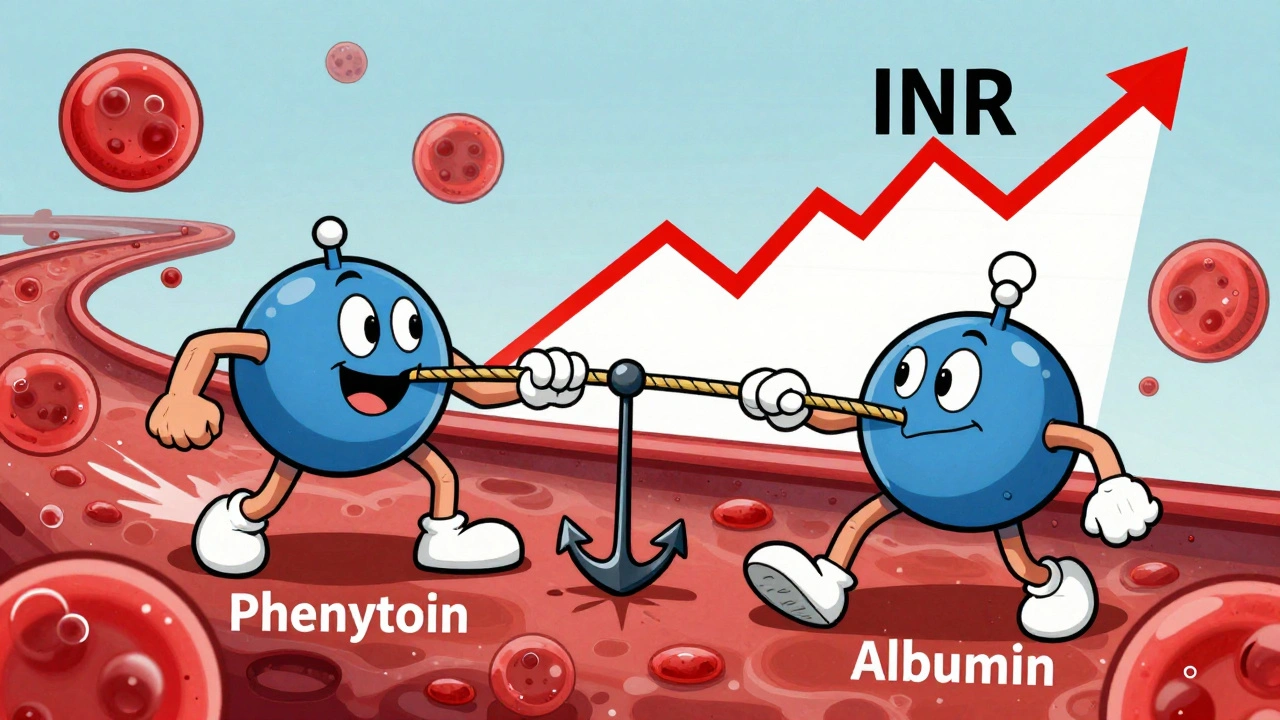
Phenytoin and warfarin interact in two phases: an early spike in INR from protein displacement, followed by a dangerous drop due to enzyme induction. This requires close INR monitoring and careful dose adjustments to avoid bleeding or clotting.
full article