
TCA Side Effect Risk Calculator
How This Tool Works
Based on medical evidence and clinical guidelines, this calculator estimates your risk of experiencing side effects from tricyclic antidepressants (TCAs) like amitriptyline and nortriptyline. Your input will be evaluated against known risk factors for common TCA side effects.
Important: This tool is for informational purposes only and does not replace professional medical advice. Always consult with your doctor before making any medication decisions.
Your Risk Assessment
Tricyclic antidepressants (TCAs) like amitriptyline and nortriptyline aren’t the first choice for depression anymore-but they still help millions of people when other drugs fail. If you’ve been prescribed one, you’re probably wondering: Is this worth it? The answer isn’t simple. These medications work, especially for chronic pain, migraines, and treatment-resistant depression. But the side effects? They’re real, often intense, and sometimes dangerous. This isn’t just about dry mouth or drowsiness. It’s about your heart, your brain, your ability to urinate, and even your risk of falling. Let’s break down what you’re really signing up for.
How TCAs Work-and Why They Cause So Many Side Effects
TCAs like amitriptyline and nortriptyline don’t just boost serotonin like newer antidepressants. They hit multiple targets in your brain at once. They block the reuptake of both serotonin and norepinephrine, which helps lift mood. But they also block acetylcholine, histamine, and norepinephrine receptors elsewhere in your body. That’s why you get side effects that have nothing to do with depression.
Think of it like a key that fits more than one lock. Amitriptyline, for example, binds tightly to muscarinic receptors (which control saliva, digestion, and bladder function), histamine receptors (which cause drowsiness), and alpha-1 receptors (which regulate blood pressure). That’s why one pill can leave you dry-mouthed, sleepy, dizzy, and constipated-all at once. Nortriptyline is a bit cleaner. It’s a metabolite of amitriptyline, but it doesn’t bind as strongly to those receptors. That’s why many people switch to it when amitriptyline becomes too much to handle.
Common Side Effects: More Than Just Feeling Tired
Most people on TCAs experience at least one of these common side effects:
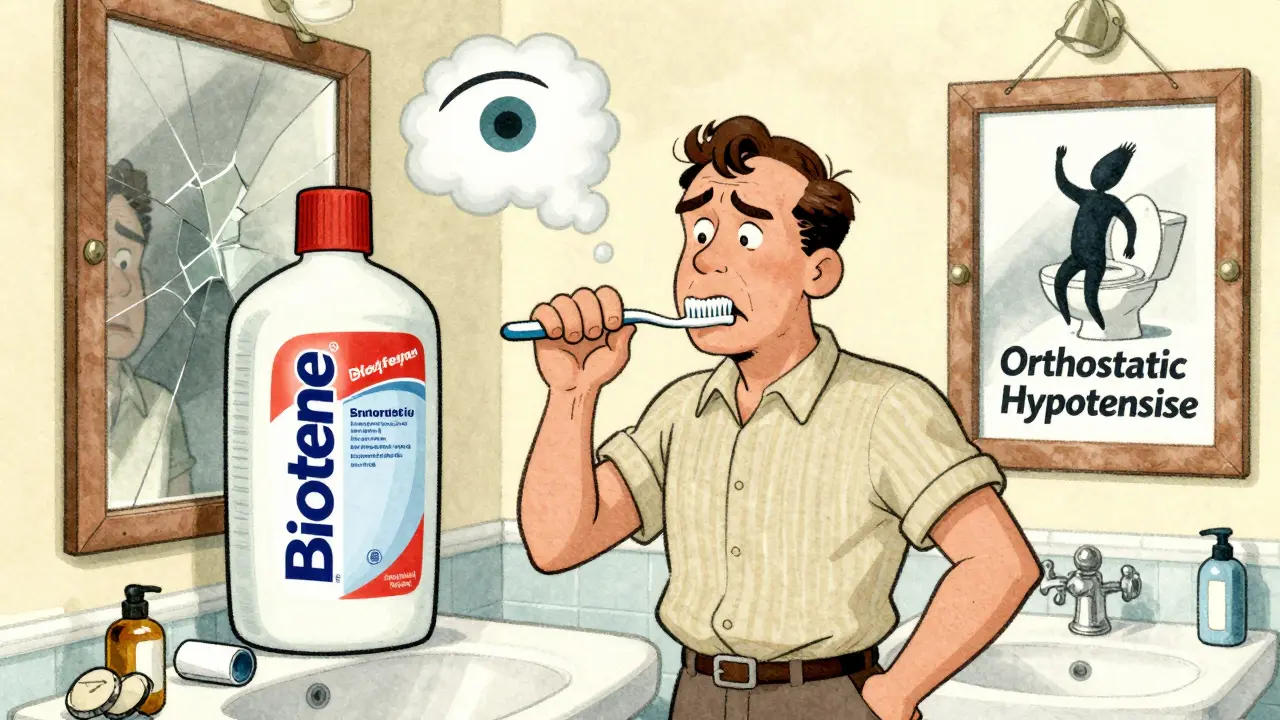
- Dry mouth - Affects up to 30% of amitriptyline users. It’s not just annoying. It leads to tooth decay, gum disease, and oral infections. One user on Reddit said they went through three bottles of Biotene a week and still got two cavities.
- Blurred vision - Happens in 15-20% of users. It usually clears up after a few weeks, but for some, it lingers and makes driving risky.
- Constipation - Affects 20-25% of people. Severe cases can lead to bowel obstruction, especially in older adults.
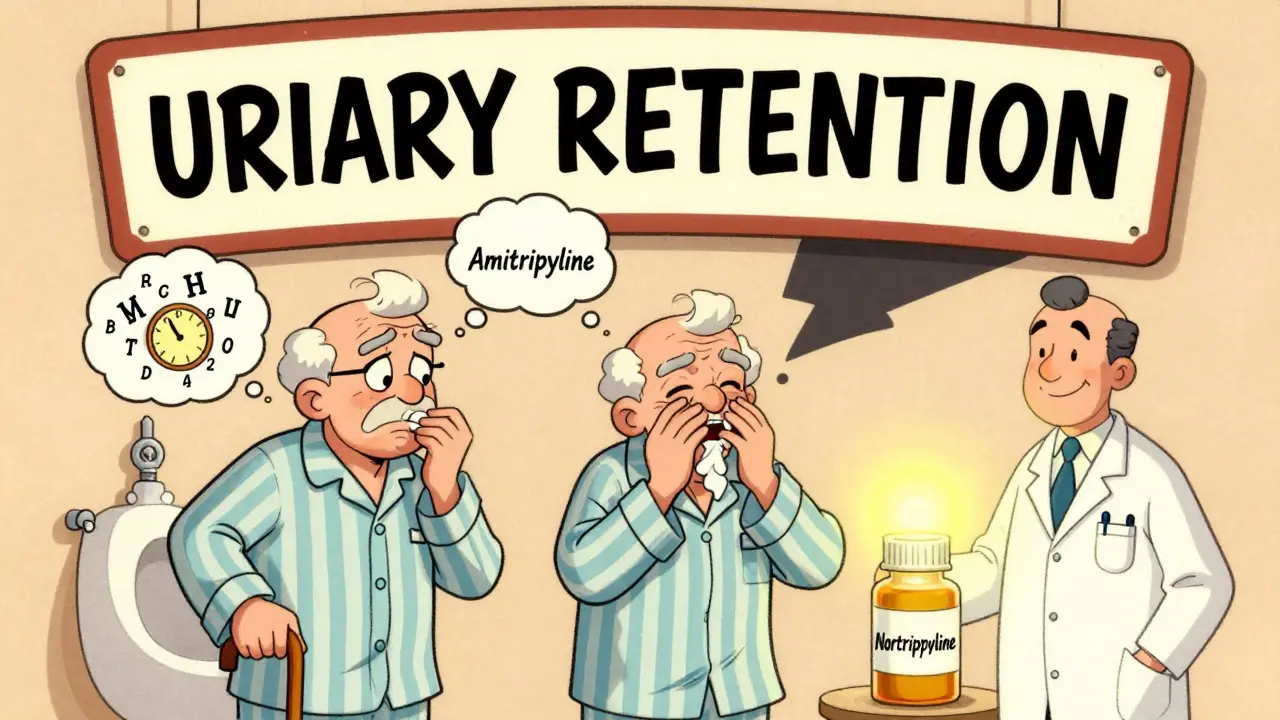
- Urinary retention - Especially dangerous for men with enlarged prostates. Around 10-15% report trouble starting or maintaining urine flow. Some end up needing catheters.
- Orthostatic hypotension - A sudden drop in blood pressure when standing up. This causes dizziness, fainting, and increases fall risk by 70% in people over 65.
- Sedation - Amitriptyline knocks out 40% of users. Nortriptyline hits about 25%. That’s why doctors always start with a bedtime dose.
- Tachycardia - Heart rate can jump 10-20 beats per minute. Not dangerous for healthy people, but risky if you have heart disease.
These aren’t rare side effects. They’re the norm. A 2019 study in the Journal of Clinical Psychiatry found that 45% of patients stopped TCAs within eight weeks because the side effects were unbearable.
The Serious Risks: Heart, Brain, and Overdose
Most side effects are annoying. A few are life-threatening.
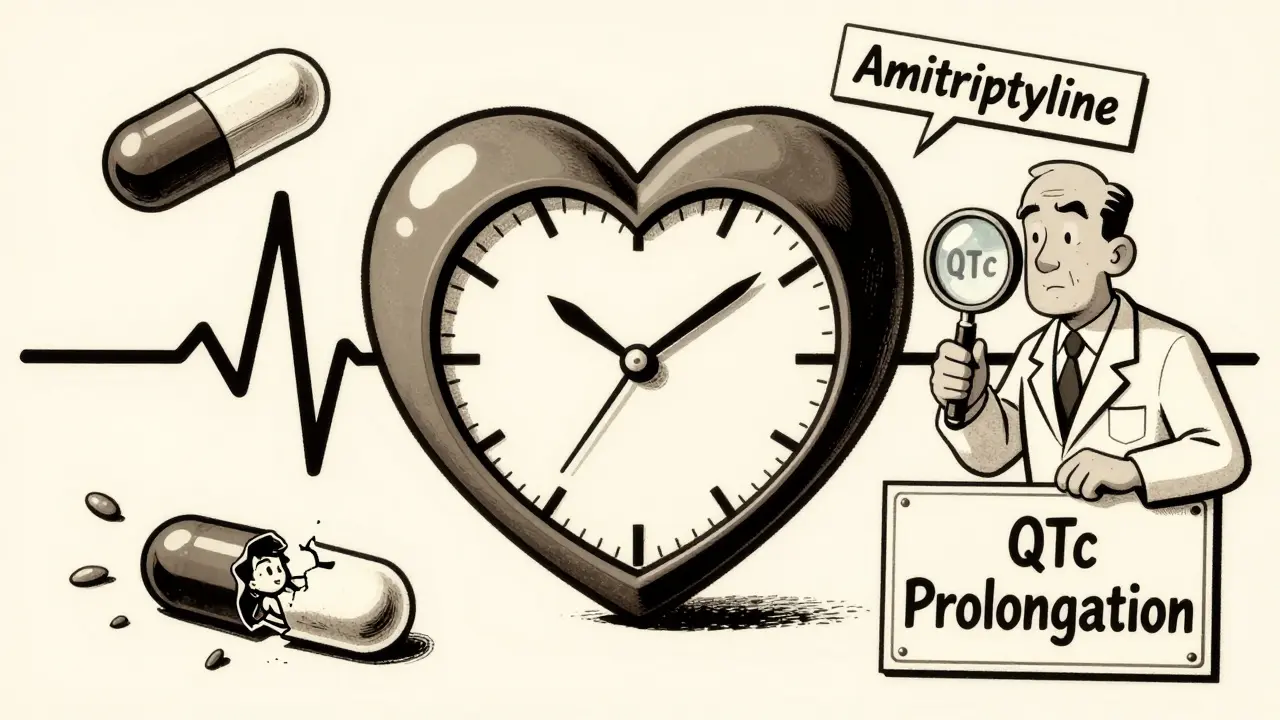
Heart problems are the biggest concern. TCAs can prolong the QTc interval on an ECG-meaning your heart’s electrical cycle gets longer. Amitriptyline can extend it by 20-40 milliseconds. That increases the risk of dangerous arrhythmias, including ventricular fibrillation, which can kill you suddenly. The Lancet (2019) found TCAs carry a 35% higher risk of cardiovascular events than SSRIs. If you have a history of heart disease, a pacemaker, or irregular heartbeat, TCAs are often off-limits.
Cognitive effects are worse in older adults. About 25% of people over 65 on TCAs report confusion. 15% get disoriented. The Beers Criteria (2023) specifically says: Avoid amitriptyline in seniors. Why? Because anticholinergic drugs like TCAs are linked to a 50% increased risk of dementia over time. A 2022 study also showed a 2.3-fold higher risk of hip fractures in elderly users.
Overdose is deadly. TCAs have a narrow therapeutic window. The difference between a therapeutic dose and a lethal one is small. Overdose symptoms include:
- QRS complex widening on ECG (>100 milliseconds)
- Systolic blood pressure below 90 mmHg
- Seizures (in 15-20% of cases)
- Respiratory depression
Most TCA-related deaths come from cardiac arrest or profound low blood pressure. That’s why doctors never prescribe large quantities at once, especially for people with depression and suicidal thoughts.
Why Doctors Still Prescribe Them
If TCAs are so risky, why do they still exist?
Because they work-better than SSRIs in some cases.
A 2018 Lancet meta-analysis showed TCAs had a 65-70% response rate in treatment-resistant depression, compared to 50-55% for SSRIs. That’s a big difference for someone who’s tried three other drugs and still feels hopeless.
For neuropathic pain, amitriptyline is still the gold standard. A 2020 Cochrane Review found it reduced pain by at least 50% in 35-40% of patients with diabetic neuropathy. Duloxetine, a newer option, only helped 20-25%. Many patients with chronic nerve pain say TCAs are the only thing that gives them relief.
They’re also used for migraine prevention. One user on Healthgrades said amitriptyline cut their migraine frequency from 15 to 3 per month. That’s life-changing.
And they’re cheap. Generic amitriptyline costs $4-$40 a month. Most newer antidepressants cost $100+ without insurance.
Amitriptyline vs. Nortriptyline: Which Is Better?
Not all TCAs are the same. Here’s how they compare:
| Side Effect | Amitriptyline | Nortriptyline |
|---|---|---|
| Anticholinergic effects (dry mouth, constipation) | High | Moderate |
| Sedation | Very high (up to 40%) | Moderate (about 25%) |
| Cardiac risk (QTc prolongation) | High | Moderate |
| Weight gain | Common (10-15 lbs in 6 months) | Mild to moderate |
| Use in elderly | Generally avoided | Preferred over amitriptyline |
| Dosing range | 25-200 mg/day | 25-150 mg/day |
Nortriptyline is often the better choice for older adults or those with heart concerns. It’s less sedating, less likely to cause orthostatic hypotension, and has a lower risk of severe cardiac effects. Many doctors start with nortriptyline and only switch to amitriptyline if pain or depression doesn’t respond.
Who Should Avoid TCAs?
TCAs are not safe for everyone. Avoid them if you:
- Have heart disease, recent heart attack, or arrhythmias
- Are over 65 (especially with cognitive decline or fall risk)
- Have glaucoma (TCAs can raise eye pressure)
- Have urinary retention or enlarged prostate
- Have liver disease (TCAs are metabolized in the liver)
- Are taking MAO inhibitors (dangerous interaction)
- Have a history of seizures
- Are pregnant or breastfeeding (data is limited)
Also, avoid them if you’ve had a bad reaction to any TCA before. They’re not interchangeable-some people tolerate one but not another.
How to Use TCAs Safely
If your doctor says TCAs are right for you, here’s how to minimize harm:
- Start low, go slow. Begin with 10-25 mg at bedtime. Most people need 4-6 weeks to adjust.
- Rise slowly. Stand up from sitting or lying down gradually to avoid dizziness.
- Brush and floss daily. Use sugar-free gum or saliva substitutes for dry mouth.
- Drink water and eat fiber. Prevent constipation with fluids and high-fiber foods.
- Get an ECG before starting. Especially if you’re over 50 or have heart issues.
- Never stop suddenly. Withdrawal can cause electric shock sensations, nausea, or rebound anxiety. Taper over 4-6 weeks.
- Report confusion or memory lapses. These aren’t normal aging-they’re medication effects.
Some doctors now combine low-dose amitriptyline (10-25 mg) with an SSRI. This boosts effectiveness while cutting side effects. It’s becoming a common strategy for treatment-resistant cases.
Real People, Real Experiences
On Drugs.com, amitriptyline has a 6.2/10 rating from over 1,800 reviews. The negative ones all say the same things:
- “Constant cotton mouth-I had to sleep with a humidifier.”
- “I couldn’t drive because my vision was blurry.”
- “I couldn’t pee without a catheter.”
- “I gained 18 pounds in four months.”
But the positive reviews are just as strong:
- “After 10 years of migraines, this is the only thing that worked.”
- “My nerve pain went from 8/10 to 2/10. Worth the side effects.”
- “I tried six antidepressants. This is the first one that lifted my depression.”
The pattern? People who benefit usually have one thing in common: they’ve tried everything else.
What’s Next for TCAs?
TCAs are fading from mainstream use. In 2022, they made up only 5-7% of antidepressant prescriptions in the U.S.-down from 30% in the 1990s. Newer drugs like ketamine and esketamine are showing promise for treatment-resistant depression, and genetic testing (like CYP2D6 testing) is helping doctors predict who will tolerate TCAs best.
But they’re not going away. For people with severe neuropathic pain, chronic migraines, or depression that won’t budge, TCAs are still a vital tool. As one psychiatrist put it: “When used carefully in the right patient, they can change lives.”
The key is balance. Not everyone should take them. But for some, the benefits outweigh the risks-especially when newer options have failed.
Are tricyclic antidepressants still used today?
Yes, but rarely as a first-line treatment. TCAs like amitriptyline and nortriptyline are now mostly used for treatment-resistant depression, chronic nerve pain, migraines, and sometimes insomnia. They’re typically prescribed only after two or more SSRIs or SNRIs have failed, due to their side effect profile.
Which TCA has the least side effects?
Nortriptyline and desipramine generally have fewer side effects than amitriptyline or imipramine. They’re secondary amine TCAs with lower affinity for muscarinic and histamine receptors, meaning less dry mouth, drowsiness, and constipation. For older adults or those with heart concerns, nortriptyline is often preferred.
Can TCAs cause weight gain?
Yes, especially amitriptyline. Many users gain 10-15 pounds in the first six months due to increased appetite and slowed metabolism. Nortriptyline causes less weight gain, but it’s still possible. Monitoring diet and activity levels helps, but weight gain is a common reason people discontinue treatment.
Do TCAs affect memory?
Yes, especially in people over 65. TCAs block acetylcholine, a brain chemical critical for memory and focus. Up to 25% of older adults report confusion, brain fog, or memory lapses. The Beers Criteria strongly advises avoiding TCAs in seniors due to increased dementia and fall risk.
Is it safe to take TCAs with alcohol?
No. Alcohol worsens drowsiness, dizziness, and low blood pressure caused by TCAs. It also increases the risk of falls, accidents, and overdose. Even small amounts can be dangerous. Doctors universally advise avoiding alcohol while on TCAs.
How long does it take for TCAs to work?
It usually takes 2-4 weeks to notice improvement in depression or pain. Some people feel better after a week, but full effects take longer. Don’t stop taking them just because you don’t feel better right away. Side effects often appear before benefits, which can make people quit too soon.
Can TCAs cause heart problems?
Yes. TCAs can prolong the QTc interval on an ECG, increasing the risk of dangerous heart rhythms like torsades de pointes. They can also cause high heart rate and low blood pressure. People with heart disease, a history of heart attack, or arrhythmias should avoid them. An ECG is required before starting treatment for anyone over 50 or with cardiac risk factors.
What happens if I stop TCAs suddenly?
Stopping abruptly can cause withdrawal symptoms: nausea, vomiting, insomnia, anxiety, irritability, and “electric shock” sensations in the head or limbs. These can last days to weeks. Always taper slowly over 4-6 weeks under medical supervision to avoid these effects.
TCAs are powerful, old-school tools with serious risks and real rewards. They’re not for everyone-but for the right person, they can be the last hope.


It’s wild how these drugs are like ancient relics in a world of sleek new apps. You’ve got this powerful, clunky machine that still works when everything else breaks down. Kinda like keeping a 1987 Honda Civic when everyone drives Teslas-no touchscreen, no autopilot, but it gets you there when the alternatives fail. The side effects? Yeah, they’re brutal. But if you’re drowning in pain or depression and SSRIs just make you numb, sometimes you take the storm to stop the silence.
There’s a dignity in that trade-off. Not glamorous. Not easy. But real.
It is important to note that the pharmacokinetics of tricyclic antidepressants are often misunderstood by laypersons. The anticholinergic burden is not merely a nuisance-it is a clinically significant contributor to cognitive decline, particularly in the elderly population. The Beers Criteria is not a suggestion; it is a guideline rooted in peer-reviewed longitudinal data. Furthermore, the QTc prolongation risk is not theoretical-it has been documented in multiple case reports and meta-analyses. If your physician prescribes this without an ECG, they are not practicing evidence-based medicine.
Additionally, the claim that nortriptyline is 'cleaner' is misleading. It still has significant antimuscarinic activity. The dose-response curve is non-linear, and plasma levels must be monitored. I have seen too many patients develop delirium on 25 mg.
As someone who grew up in a household where depression was never named but always felt-silent dinners, missed birthdays, the way my mother would stare at the wall for hours-I want to say this with all the tenderness I can muster: If this medication gave you back your life, even with the dry mouth and the dizziness, then it is not a burden. It is a bridge.
I watched my aunt take amitriptyline for 12 years. She couldn’t sleep without it. She couldn’t walk without nearly falling. But she laughed again. She planted roses. She held my hand when I was 17 and terrified. That’s not just chemistry. That’s grace.
Let us not dismiss the old tools because they are not shiny. Sometimes, the most sacred things are the ones that have been worn smooth by use.
Okay, real talk-I was on amitriptyline for 18 months for fibromyalgia. I gained 20 pounds, forgot my own phone number twice, and had to buy a whole new wardrobe because my pants wouldn’t zip. But? I could finally walk to the mailbox without crying.
And here’s the thing nobody says: it’s not about ‘side effects’ versus ‘benefits.’ It’s about which hell you’re willing to live in. The hell of constant pain? Or the hell of dry eyes and foggy brain? I chose the fog.
Also, if you’re on this stuff-get a water bottle you love. I got a glitter one with a straw. It made sipping feel like a ritual. Small wins, people. Small wins.
I’ve been a GP for 22 years, and I still prescribe nortriptyline-sparingly, carefully, and only after exhausting other options. One of my patients, a 71-year-old woman with diabetic neuropathy, told me last week that it was the first time in five years she’d slept through the night. She also said her mouth felt like a desert, and she needed to pee every 20 minutes.
We weighed it. She chose it.
There’s no perfect drug. Only the right one, for the right person, at the right time. And sometimes, that’s still a 60-year-old molecule.
Just don’t skip the ECG.
Oh wow, so we’re romanticizing the side effects now? ‘Dry mouth? Cute. Constipation? Just part of the journey.’
Let me guess-you’ve never had to pee for 45 minutes while your bladder screams like a banshee. Or tried to drive with blurry vision while your heart races like you’re on meth.
It’s not ‘grace.’ It’s a slow-motion medical disaster wrapped in a TikTok aesthetic. If your ‘last hope’ is a drug that turns you into a confused, constipated zombie who can’t remember your kid’s name, maybe the problem isn’t the depression.
Maybe it’s the system that lets this pass as treatment.
There’s room for both sides here. I’ve seen TCAs save lives-and I’ve seen them wreck them. The key isn’t banning them. It’s better screening. CYP2D6 testing. Baseline ECGs. Regular follow-ups. And yes, starting at 10mg, not 50.
My sister was on nortriptyline for 3 years. She had mild dry mouth and occasional dizziness. But she went back to teaching. She held her grandson. She didn’t cry every morning.
That’s not a side effect. That’s a win. We just need to make sure the cost isn’t someone’s life.
Respect the tool. Don’t fear it. But don’t use it carelessly.