
Side Effect Reduction Calculator
This calculator estimates potential side effect reduction when switching from immediate-release to extended-release medications. Based on clinical studies showing 20-40% side effect reduction with extended-release formulations.
Estimated extended-release side effect rate
Based on 20-40% reduction range from clinical studies
Example: If your immediate-release medication causes 20% side effects, extended-release could reduce this to 12-14%.
Note: Actual reduction varies based on medication, individual biology, and other factors.
Important: This is for informational purposes only. Always consult your doctor or pharmacist before changing medications. Results are estimates based on published studies and may not reflect your personal experience.
Why Your Pill Shape Matters More Than You Think
Take a pill. It’s simple, right? But not all pills are created equal. A tablet, a capsule, and an extended-release version might look similar on the shelf, but inside, they behave very differently in your body. That difference changes how fast the medicine works, how long it lasts, and-most importantly-how many side effects you get.
Let’s say you’re on medication for depression, epilepsy, or high blood pressure. If you’re taking the immediate-release version, your body gets a quick hit of the drug. That spike can cause nausea, dizziness, or headaches. Now switch to the extended-release version. The same medicine, but spread out over 12 to 24 hours. That smooth delivery cuts side effects by 20-40%, according to clinical studies. But it’s not magic. It’s science. And if you don’t understand how it works, you could miss out on better results-or even hurt yourself.
Tablets: The Workhorse of Oral Medicines
Tablets are the most common form of medicine you’ll find. They’re pressed powder, bound together with fillers, binders, and coatings. Most dissolve in your stomach within 30 to 60 minutes. Peak levels in your blood? Usually within 1 to 2 hours.
Why use them? Stability. Tablets last 2 to 3 years on the shelf without refrigeration. They’re cheap to make, easy to swallow (for most people), and come in precise doses. But they have downsides. If you have a slow digestive system, the tablet might sit in your stomach too long, or not break down properly. Some tablets have coatings that delay release-like enteric coatings that only dissolve in the intestine to protect your stomach. That’s not extended-release. That’s delayed-release. Don’t confuse the two.
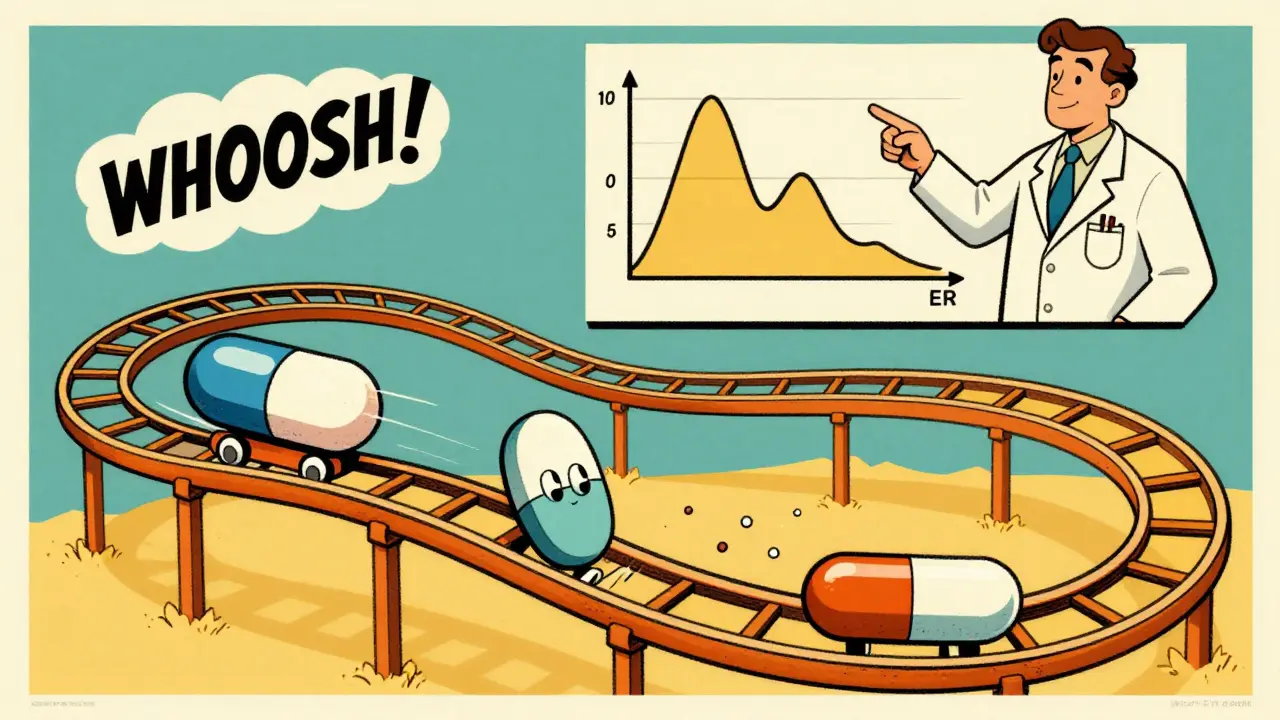
And never crush a tablet unless the label says it’s safe. Some tablets are designed to dissolve slowly. Crush them, and you get a full dose all at once. That’s called dose dumping. It can land you in the ER.
Capsules: Faster Absorption, Less Stability
Capsules are usually made of gelatin or plant-based shells that hold powder or liquid inside. They dissolve faster than tablets-often in under 20 minutes. That means the medicine enters your bloodstream quicker. For drugs like painkillers or antibiotics, that’s a good thing. You feel relief faster.
But here’s the catch: capsules don’t last as long on the shelf. Moisture and heat can break down the shell, making the medicine less effective. That’s why you’ll see capsules in blister packs, not bottles. They’re also harder to split. If you need half a dose, you’re stuck with a tablet or a liquid form.
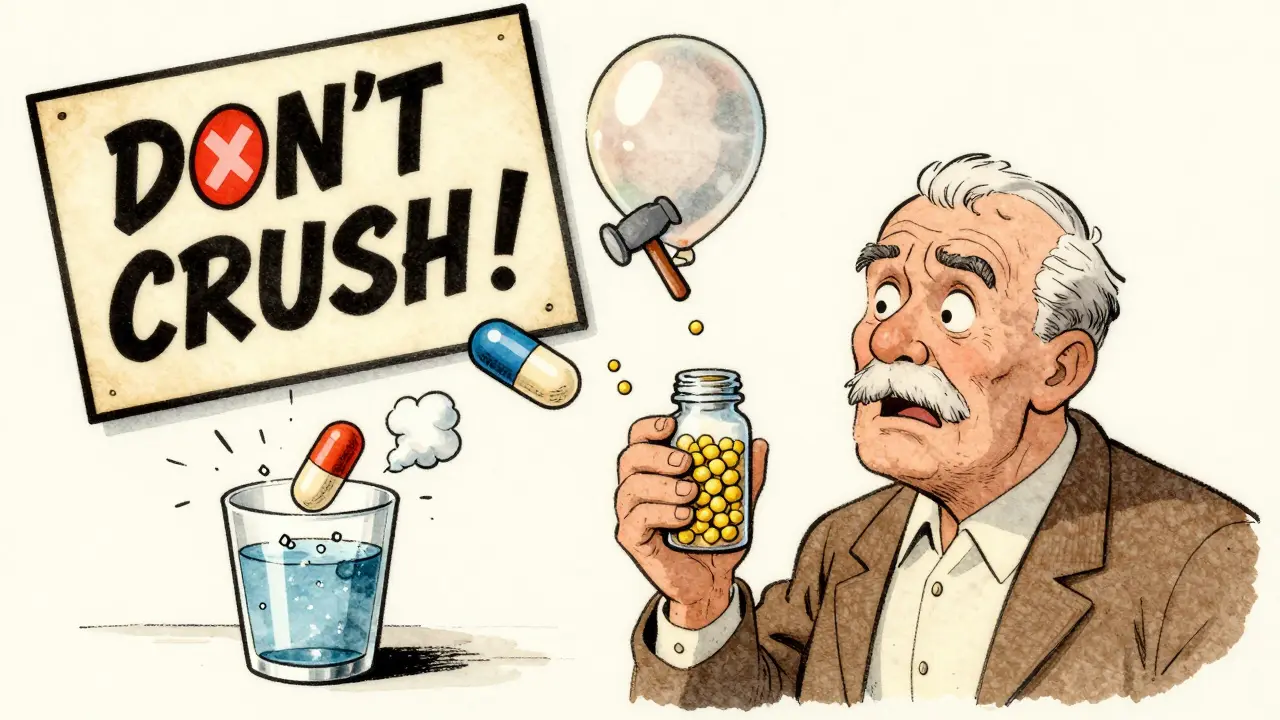
Some capsules are designed to release medicine in parts-called multiparticulate systems. These are often used in extended-release versions. Instead of one big bead, you get dozens of tiny pellets, each releasing at a slightly different time. That’s how drugs like Rytary for Parkinson’s deliver three pulses of medication in one capsule.
Extended-Release: The Slow Burn
Extended-release (ER), sustained-release (SR), or extended-duration (XL/XR) formulations are engineered to release medicine slowly over 12 to 24 hours. They use special polymers-like hydroxypropyl methylcellulose (HPMC) or ethylcellulose-that act like a controlled valve. Water from your gut slowly seeps in, swelling the matrix or dissolving the coating, letting the drug leak out gradually.
Why does this matter? Because steady levels mean fewer side effects. Take bupropion for depression. The immediate-release version causes nausea in 19% of users. The extended-release version? Only 13%. Venlafaxine? Dizziness drops by 22%. That’s not a small difference. It’s the difference between sticking with your medication or quitting because you feel awful.
But ER pills aren’t perfect. They’re bigger. Harder to swallow. A 2022 Mayo Clinic survey found 27% of elderly patients struggle with them. You can’t crush them. You can’t split them. If you miss a dose, you can’t just double up the next time. Some ER systems are forgiving-like Trokendi XR, where taking the missed dose within 24 hours still keeps you in range. Others? Not so much.
Food can mess with ER pills too. A high-fat meal can speed up or slow down release by 20-35% in 15% of approved ER products. That’s why some labels say “take on an empty stomach.” Ignore that, and you might get too much drug too fast-or not enough at all.
Side Effects: Peak vs. Plateau
Side effects aren’t random. They’re tied to how high the drug spikes in your blood. Immediate-release forms create peaks. Those peaks trigger nausea, jitteriness, dizziness, or even heart palpitations. Extended-release forms flatten those peaks. You get the same total dose-but spread out. Your body handles it better.
Studies show that ER versions of antiepileptic drugs like carbamazepine and levetiracetam reduce side effects by 25-40% compared to immediate-release. That’s why neurologists now prefer ER versions for chronic conditions. Fewer side effects mean better compliance. And better compliance means fewer seizures, fewer mood swings, fewer hospital visits.
But here’s the twist: ER doesn’t eliminate side effects. It just shifts them. If you have gastroparesis (slow stomach emptying), your body might not absorb the ER pill at all. The pill passes through intact. You think it didn’t work. It did. It just never released. That’s why doctors avoid ER meds in people with GI motility disorders.
And don’t forget: if you’re on multiple ER drugs, you’re stacking slow-release systems. That’s fine if they’re designed to work together. But if you’re not sure, ask your pharmacist. Some combinations can cause unexpected buildup.
Cost, Convenience, and Confusion
Extended-release versions cost more. Way more. Generic bupropion immediate-release? $15 a month. Wellbutrin XL? $185. That’s why many people stick with the cheaper version-even if they suffer more side effects. But if you’re paying for doctor visits, missed work, or ER trips because of nausea, is the cheaper pill really saving you money?
And the names? Confusing. DR = delayed-release (enteric-coated). SR = sustained-release. ER/XR/XL = extended-release. They’re not interchangeable. A DR pill might delay release for 2 hours, then dump everything. An ER pill releases steadily for 12 hours. Mixing them up can be dangerous.
Prescribers make mistakes too. A 2021 analysis found 12% of medication errors involving ER drugs came from confusion between ER and immediate-release versions. That’s why labels now say “Extended-Release” in bold. Still, patients miss it. Always double-check the name on your prescription.
What to Ask Your Pharmacist
- Is this tablet or capsule extended-release? What’s the suffix-XL, XR, SR?
- Can I take it with food? Should I avoid fat?
- What happens if I miss a dose?
- Can I open the capsule or crush the tablet?
- Is there a cheaper generic version that’s not extended-release? What are the trade-offs?
The Future Is Smarter Delivery
Pharma companies aren’t stopping. New ER systems are being developed to target specific parts of the gut, release medicine only when your body needs it, or even respond to your body’s pH levels. One experimental HIV drug stays in the stomach for 24 hours, releasing tiny doses all day. That’s huge for people who forget pills.
But there’s a dark side. The polymers used in these coatings don’t break down. A 2022 study found them in 78% of wastewater samples. We’re literally flushing plastic from our meds into rivers. Regulators are starting to ask: is this sustainable?
For now, the choice is yours. If you’re on daily meds and tired of side effects, ask about extended-release. If you have trouble swallowing, or your stomach doesn’t move well, stick with immediate-release or ask for liquid. Your body isn’t a machine. It’s a system. And your medicine should match how it works.
Real Stories, Real Results
A 68-year-old woman with bipolar disorder was taking three doses of quetiapine a day. She missed doses. Her moods swung wildly. Her doctor switched her to once-daily quetiapine ER. Within three months, her adherence jumped from 65% to 92%. Mood episodes dropped by 47%. She didn’t feel better because the drug changed. She felt better because she took it.
On Drugs.com, ER versions average 4.2 out of 5 stars. Immediate-release? 3.8. The top reason for higher ratings? “I don’t feel sick anymore.”
It’s not about the pill. It’s about the pattern. Slow and steady wins the race-not just in life, but in medicine too.


11 Comments
Write a comment