
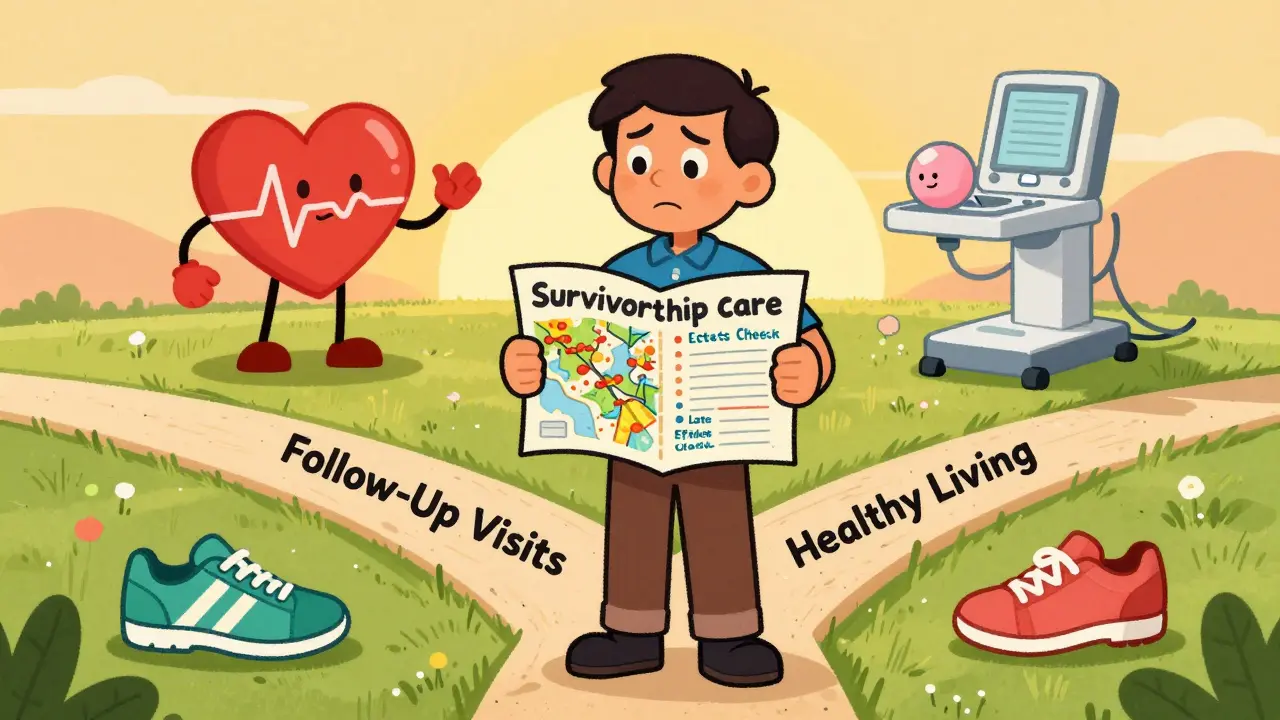
When cancer treatment ends, many survivors feel a strange mix of relief and uncertainty. You’ve fought hard, made it through chemo, radiation, or surgery - but now what? The medical team that guided you through treatment suddenly fades from daily view. That’s when a survivorship care plan becomes essential. It’s not just paperwork. It’s your roadmap for life after cancer.
What Exactly Is a Survivorship Care Plan?
A survivorship care plan is a personalized document that breaks down two key parts: your treatment history and what comes next. It’s not a generic form. It’s built from your exact cancer type, stage, treatments, and personal health risks. The Institute of Medicine first pushed for this back in 2006, calling it a way to stop survivors from falling through the cracks. Today, nearly all NCI-designated cancer centers use them.The first section - the treatment summary - lists everything you received. That means:
- The type and stage of your cancer
- Exact dates of chemotherapy, radiation, or surgery
- Drug names, doses, and how many cycles you had
- Details of any clinical trials you joined
- Names and contact info for your oncology team
This isn’t just for you. It’s for your primary care doctor, who likely never treated cancer before. Studies show 68% of primary care providers feel unprepared to manage survivors without this info. Without it, you risk missed screenings or misdiagnosed symptoms.
Follow-Up: When and How Often?
Follow-up isn’t about checking if the cancer is back - though that’s part of it. It’s also about catching problems early before they become emergencies. The timing depends on your cancer type and treatment. For example:- Women who had chest radiation for Hodgkin lymphoma need a mammogram every year starting 8 years after treatment.
- Survivors treated with anthracyclines (like doxorubicin) need an echocardiogram every 5 years if their total dose was over 250 mg/m².
- Colorectal cancer survivors typically get a colonoscopy 1 year after surgery, then every 3-5 years if normal.
The Children’s Oncology Group updates guidelines every two years. Their 2022 edition includes 112 specific screening rules for 15 organ systems - everything from heart function to thyroid health - based on your exact treatment. These aren’t guesses. They’re backed by decades of data tracking thousands of survivors.
Most plans recommend visits with your oncologist every 3-6 months for the first 2-3 years, then yearly after that. But your plan should say exactly when and why. A 2022 CDC study found survivors who followed their plan were 2.3 times more likely to get the right tests on time.
Late Effects: The Hidden Costs of Survival
Cancer treatment doesn’t just end when the last pill is taken or the final radiation beam is turned off. Many side effects show up months or years later - these are called late effects.Here are common ones by treatment type:
- Chemotherapy: Nerve damage (neuropathy), early menopause, infertility, kidney or lung damage, increased risk of second cancers.
- Radiation: Heart disease (especially with left breast radiation), thyroid problems, bowel or bladder changes, lymphedema, bone thinning.
- Surgery: Chronic pain, scarring, mobility issues, sexual dysfunction, digestive changes.
- Immunotherapy and CAR-T: Autoimmune reactions, chronic fatigue, hormonal imbalances - newer treatments mean newer risks.
These aren’t rare. Up to 75% of survivors experience at least one late effect. And many don’t connect their new joint pain, heart palpitations, or memory issues to cancer treatment. That’s why your plan must list them - and what to do if they appear.
Healthy Living: More Than Just a Recommendation
Your care plan should include actionable advice - not just “eat healthy” but specifics:- Weight-bearing exercise at least 3 times a week to fight bone loss from hormone therapy.
- Limit alcohol to one drink a day - it raises breast and liver cancer risk.
- Quit smoking - survivors who smoke have 50% higher risk of recurrence.
- Get vaccinated - flu, pneumonia, shingles - your immune system may still be recovering.
- Consider a nutritionist if you’ve had GI surgery or chemo-induced taste changes.
These aren’t optional. A 2022 CDC report showed survivors who followed lifestyle advice had 18% fewer hospital stays and 23% fewer ER visits in the first two years after treatment.
Why So Many Plans Go Unused
Here’s the hard truth: 68% of survivors get some kind of treatment summary. But only 42% get a full follow-up plan with clear screening schedules. And even then, only 41% bring it to their primary care visits.Why? Three big reasons:
- Timing: Many centers hand out the plan right after treatment ends - when survivors are exhausted, overwhelmed, or in denial.
- Format: A 20-page PDF nobody understands isn’t helpful. Digital tools like OncoLife and ASCO’s new Builder generate clear, personalized plans in under 10 minutes.
- Access: Only 61% of cancer centers have staff dedicated to creating these plans. And only 28% of Medicare contractors pay for them - meaning hospitals often skip it to save money.
Worse, disparities exist. Academic centers give out plans to 78% of patients. Safety-net hospitals? Only 31%. If you’re low-income, rural, or uninsured, your odds of getting a real plan drop sharply.
What You Can Do Right Now
Don’t wait for your doctor to hand you a plan. Take charge:- Ask for your treatment summary in writing - email, printed copy, or secure portal.
- Request a follow-up plan with dates, tests, and who’s responsible.
- Bring it to your next primary care visit. Highlight the sections your doctor needs to know.
- Use free tools like OncoLife (oncolife.org) to build your own plan if yours is missing details.
- Keep a notebook: write down new symptoms, even small ones. Was it fatigue? Joint pain? Memory fog? Date it. That’s your evidence.
Survivorship isn’t the end of care - it’s a new phase. And you’re the captain of your health now. Your plan isn’t just advice. It’s your right.
What’s Changing in 2026
The field is moving fast. AI models can now predict your risk of heart damage after radiation with 84% accuracy. Polygenic risk scores are being added to plans to spot who’s at higher risk for new cancers. And new apps sync with smartwatches to track heart rate, sleep, and fatigue in real time - alerting your care team if something’s off.The SUSTAIN trial, running through 2025, is testing whether automated reminders and provider alerts boost follow-up rates. Early results look promising.
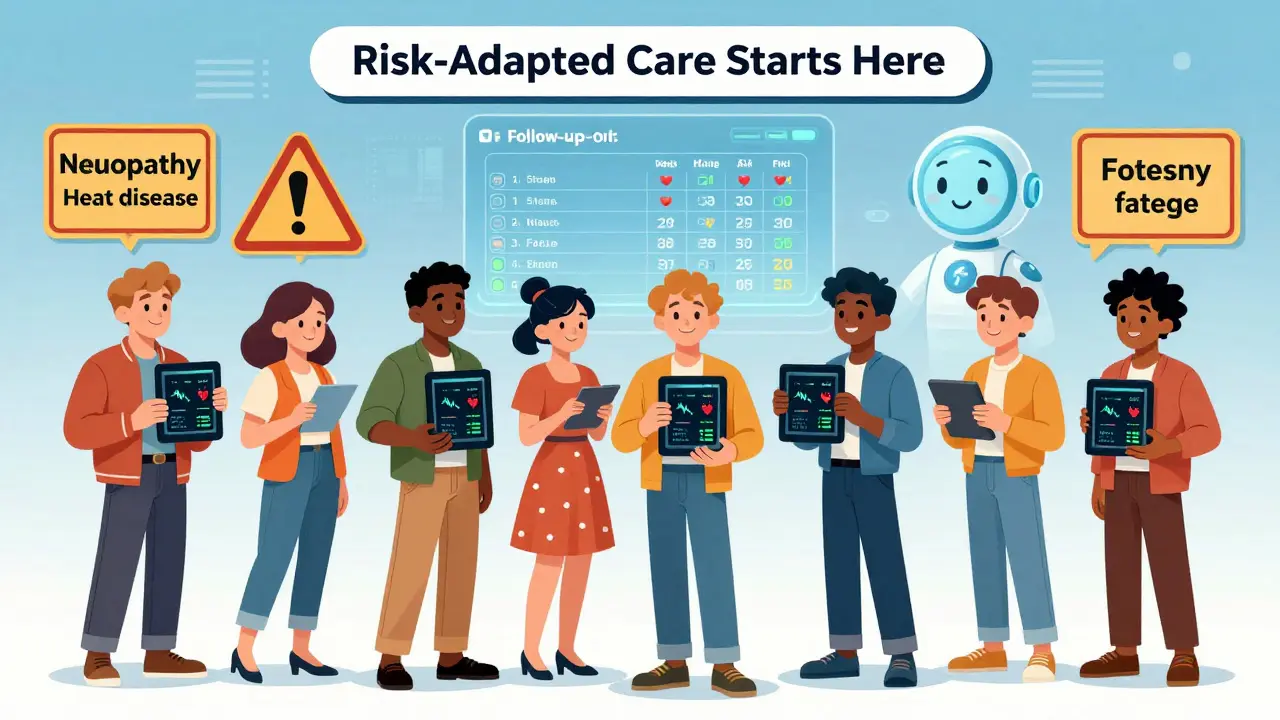
But the biggest shift? From one-size-fits-all to risk-adapted care. Leading centers now tailor follow-up intensity based on your treatment, genetics, and lifestyle - not just your cancer type. That means fewer unnecessary tests for low-risk survivors - and more focused monitoring for those who need it most.
Do I still need to see my oncologist after treatment ends?
Yes - but less often. Most survivors see their oncologist every 3-6 months for the first 2-3 years, then yearly. Your plan will say exactly when. But if you have new symptoms - unexplained pain, weight loss, fatigue - don’t wait. Call sooner.
Can my primary care doctor handle my follow-up care?
They can - but only if they have your survivorship care plan. Most primary care doctors aren’t trained in cancer follow-up. Without your treatment history and screening schedule, they might miss key tests or misinterpret symptoms. Always bring your plan to every visit.
What if I never received a survivorship care plan?
Ask for one. Contact your oncology clinic and request your treatment summary and follow-up recommendations. If they say no, use OncoLife (oncolife.org) to build your own. It’s free, evidence-based, and matches national guidelines.
Are late effects unavoidable?
Not all are, but many are. The goal isn’t to prevent them completely - it’s to catch them early. Regular screening, healthy habits, and knowing your risks can stop many late effects from becoming serious problems. For example, catching heart damage early means you can start medications before it worsens.
Is a survivorship care plan covered by insurance?
Medicare pays $127.50 for creating one - but that covers less than 40% of the actual cost. Most private insurers don’t have a specific code. That’s why many hospitals delay or skip it. But you’re still entitled to the plan. Ask for it - it’s part of standard care.
What to Do If You’re Struggling
If you feel lost after treatment, you’re not alone. Survivorship can be lonely. Reach out:- The National Coalition for Cancer Survivorship offers free resources and peer support.
- Local cancer centers often have survivorship programs - ask your oncology nurse.
- Online groups like CancerCare or Livestrong’s forums connect you with others who’ve been there.
Surviving cancer is just the beginning. Taking control of your follow-up care - knowing what to watch for, when to get tested, and how to stay healthy - is what turns survival into a long, full life.

Man, I got my plan after chemo and just tossed it in a drawer. Thought I was fine. Turns out, my joint pain? Late effect from that one chemo drug. Found out years later. Don’t make my mistake. Ask for the damn plan.
One cannot help but observe the profound systemic deficiencies in the dissemination of survivorship care plans, particularly within under-resourced clinical environments. The absence of standardized reimbursement codes, coupled with the lack of dedicated oncology care coordinators, constitutes a structural failure that disproportionately impacts vulnerable populations. The 68% non-adherence rate is not a behavioral issue-it is a policy failure.
Hey, if you’re reading this and you’ve finished treatment-don’t wait. Go to OncoLife right now. It takes 8 minutes. Fill it out. Print it. Bring it to your next PCP visit. Highlight the screening part. Your life depends on this. Seriously. Do it today.
It is truly lamentable that so many survivors treat their survivorship plan as if it were a receipt from a pharmacy-something to be discarded after the transaction. One cannot expect to be granted longevity without the intellectual rigor to understand one’s own medical history. If you cannot comprehend a 20-page document detailing your treatment, perhaps you ought to defer to those who can. This is not mere advice-it is a moral obligation.
OMG I JUST REALIZED I NEVER GOT A PLAN!! I had radiation in 2019 and now I have thyroid nodules and I didn’t even connect it!! I’m calling my oncologist RIGHT NOW!! This post is a LIFE SAVER!! I’m sharing this with my entire support group!!
Interesting that the article mentions AI predicting heart damage at 84% accuracy but doesn’t mention the 16% error rate. Also, who’s auditing these algorithms? Are they trained on diverse populations? Or just the usual 78% white, middle-class cohort? Just saying.
Just got my plan last week. Printed it. Put it in my wallet next to my insurance card. My PCP was like, 'Wow, I’ve never seen this before.' I told him, 'Yeah, that’s why I’m here.' You’re not crazy for feeling lost after treatment. You’re just not getting the tools. Go get yours.
I can’t believe people are still asking if they need to see their oncologist. It’s 2025. We have apps that track your fatigue levels and alert your care team. If you’re not using technology to monitor your body after cancer, you’re basically flying blind. And if your doctor doesn’t know about your plan? That’s not their fault-it’s yours for not giving it to them.
Bro, I’m from India and we don’t even have this stuff in most hospitals. I had to email my US oncologist after I got back home to get my summary. Took 3 months. So I built my own using OncoLife. Now I show it to every new doctor I meet. If you don’t have a plan, make one. No one’s coming to save you. You’re the boss now.
Thank you for writing this. I’ve been a survivor for 7 years and still get anxious when I hear 'new symptom.' This plan isn’t about fear-it’s about control. I keep mine in a folder labeled 'My Body, My Rules.' It’s not perfect, but it’s mine. And that’s enough.
It is imperative to recognize that the current paradigm of survivorship care remains woefully inadequate in low-resource settings. While digital tools such as OncoLife are commendable, their utility is contingent upon digital literacy and internet access-luxuries not universally available. A truly equitable system must integrate community health workers and localized, low-tech templates for rural and underserved populations. 🌍🩺
Let’s be precise: the 41% rate of survivors bringing their plan to primary care visits is not due to negligence-it is due to the fact that 89% of primary care providers cannot interpret oncology-specific screening timelines. The problem isn’t the patient. It’s the lack of interoperable medical records and standardized training. Until we fix the infrastructure, we’re just rearranging deck chairs on the Titanic.