
Anticholinergic Burden Calculator
What is Anticholinergic Burden?
The Anticholinergic Cognitive Burden (ACB) scale scores medications from 0-3 based on their anticholinergic effects. Higher scores mean greater risk of cognitive decline, confusion, and dangerous sedation when combined with other CNS depressants.
A score of 3 or higher indicates high risk. Consult your doctor or pharmacist if your total is 3 or more.
Add Your Medications
Your Medication List
Total ACB Score: 0
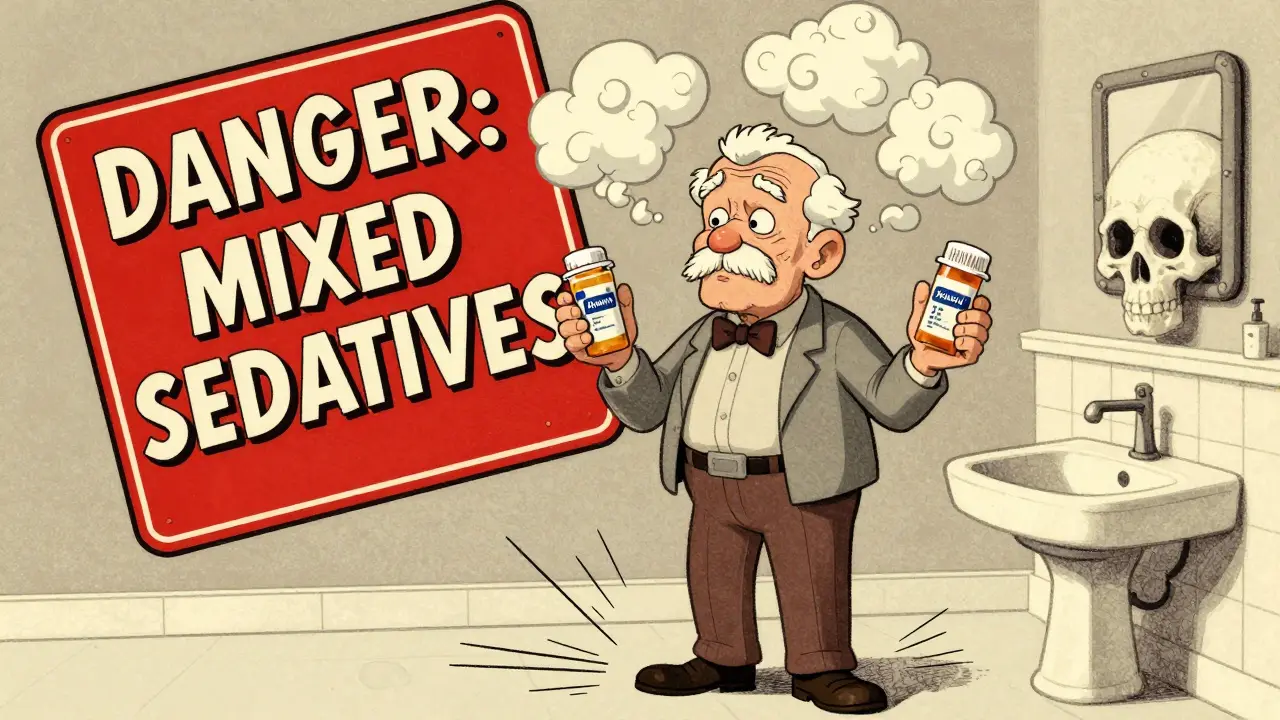
Combining antihistamines with other sedating drugs can be dangerous-sometimes life-threatening. Many people don’t realize that the over-the-counter allergy pill they take for sneezing or the sleep aid they use on weekends can dangerously amplify the effects of their prescription medications. This isn’t just a theoretical risk. Every year in the U.S., over 300,000 emergency room visits are linked to drug interactions involving antihistamines and other central nervous system (CNS) depressants. The real danger? Most of these cases are preventable.
Why First-Generation Antihistamines Are Risky
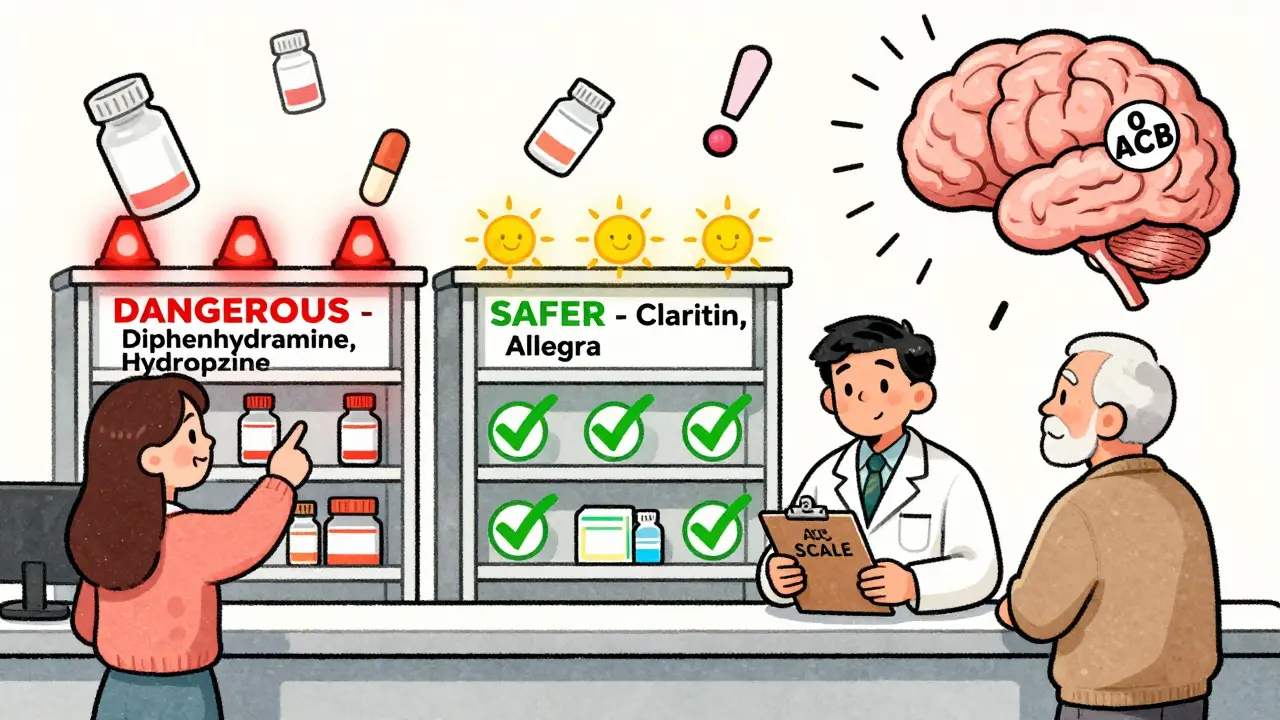
Not all antihistamines are the same. There are two main types: first-generation and second-generation. First-generation antihistamines like diphenhydramine (Benadryl), hydroxyzine (Atarax), and promethazine (Phenergan) cross the blood-brain barrier easily. That’s why they make you drowsy. But that same property makes them interact dangerously with other sedating drugs.These medications don’t just block histamine-they also block acetylcholine, a key neurotransmitter. This is called anticholinergic activity. Diphenhydramine scores a 3 on the Anticholinergic Cognitive Burden (ACB) scale, the highest level. That means it’s linked to confusion, memory problems, and even an increased risk of dementia with long-term use. A 2015 study in JAMA Internal Medicine found that people with high cumulative anticholinergic exposure had a 54% higher risk of developing dementia over 10 years.
When you take diphenhydramine with another CNS depressant, the sedation isn’t just added-it multiplies. A 2013 study in the Journal of Investigational Allergology & Clinical Immunology showed that diphenhydramine increased the sedative effect of lorazepam (a common benzodiazepine) by 37% in objective tests. Users reported feeling 42% more drowsy. That’s not just inconvenient-it’s dangerous when driving, operating machinery, or even walking around at night.
Who’s Most at Risk?
Older adults are the most vulnerable group. As we age, our liver and kidneys don’t clear drugs as efficiently. Studies show elderly patients clear first-generation antihistamines 50-70% slower than younger adults. That means the drug stays in their system longer, building up to toxic levels even at normal doses.The American Geriatrics Society includes diphenhydramine and hydroxyzine on its Beers Criteria-a list of medications that should be avoided in older adults. Why? Because they’re linked to delirium, falls, urinary retention, and cognitive decline. A 2021 study found that combining diphenhydramine with oxybutynin (used for overactive bladder) increased the risk of delirium by 54% in seniors.
But it’s not just older people. Anyone taking multiple medications is at risk. The average Medicare beneficiary takes 7.8 prescription drugs. If even one of those is a sedative-like an opioid, benzodiazepine, sleep aid, muscle relaxant, or antidepressant-the risk spikes.
Common Dangerous Combinations
Here are the most frequent and dangerous combinations doctors see in clinics and emergency rooms:- Diphenhydramine + Benzodiazepines (e.g., Xanax, Valium, Ativan): Extreme drowsiness, confusion, slowed breathing. Reddit threads are full of stories from people who ended up in the ER after mixing these.
- Diphenhydramine + Opioids (e.g., oxycodone, hydrocodone, codeine): Risk of respiratory depression jumps from 1.5% with opioids alone to 8.7% when combined with diphenhydramine, according to CDC data.
- Diphenhydramine + Alcohol: One drink with 25mg of Benadryl can cause blackouts, loss of coordination, and dangerously slow breathing. BuzzRx documented over 1,200 user reports of hospital visits from this combo.
- Diphenhydramine + Sleep Aids (e.g., zolpidem, doxylamine): Double sedation. Users report waking up unable to move or speak, a condition called sleep paralysis.
- Cimetidine + Other Drugs: Cimetidine (Tagamet), an H2 blocker used for heartburn, blocks liver enzymes that break down many medications. This can cause toxic buildup of antidepressants, blood thinners, and even some antihistamines.
One user on GoodRx wrote: "Took Benadryl for allergies, then took my Xanax for anxiety. Felt like I was underwater. Couldn’t talk. My husband called 911. I woke up in the hospital with oxygen on my face. Never again."
Second-Generation Antihistamines: The Safer Alternative
The good news? You don’t have to suffer through allergies to stay safe. Second-generation antihistamines like loratadine (Claritin), cetirizine (Zyrtec), fexofenadine (Allegra), and bilastine (Bilaxten) were designed to avoid the brain.They’re blocked from entering the CNS by a protein called P-glycoprotein. That’s why they’re called "non-drowsy." In user surveys, 97% of people taking loratadine reported no drowsiness, compared to 68% of those taking diphenhydramine. They also score 0 or 1 on the ACB scale-meaning minimal anticholinergic effects.
A 2023 study in the Journal of Clinical Psychopharmacology found that bilastine showed no interaction with lorazepam, even at double the normal dose. That’s a big deal. It suggests future antihistamines may eliminate interaction risks entirely.
Amazon reviews reflect this: Allegra has a 4.3/5 rating based on over 18,500 reviews, with users praising "no drowsiness with my other meds." Benadryl, by contrast, has a 2.9/5 rating, with 68% of negative reviews citing "dangerous interactions."
What You Should Do
If you’re taking any sedating medication-prescription or not-here’s what to do right now:- Check your meds. Look at every pill in your medicine cabinet. If it contains diphenhydramine, doxylamine, or hydroxyzine, stop using it unless your doctor says otherwise.
- Switch to second-generation. Replace Benadryl with Claritin, Zyrtec, or Allegra. They work just as well for allergies-with far less risk.
- Talk to your pharmacist. Pharmacists are trained to spot dangerous interactions. Bring your full list of medications (including supplements and OTC drugs) to your next visit.
- Use the ACB scale. Visit the University of Washington’s Anticholinergic Burden Calculator. Add up the scores of all your meds. If your total is 3 or higher, talk to your doctor about deprescribing.
- Read labels. "Nighttime" cold and flu medicines often contain diphenhydramine. So do some sleep aids and motion sickness pills.
Even "safe" second-generation antihistamines like cetirizine (Zyrtec) still carry a score of 1 on the ACB scale. That means if you’re on multiple CNS depressants, even these can add up. Don’t assume "non-drowsy" means "no interaction."

What’s Changing in 2026?
The tide is turning. Since 2018, sales of first-generation antihistamines have dropped 12.7% per year. In 2023, second-generation antihistamines made up 83% of the U.S. OTC market. The FDA now requires bold warnings on diphenhydramine packaging: "May cause severe drowsiness when combined with alcohol, opioids, or sleep medications."Health systems like Kaiser Permanente now use automated alerts in their electronic records. When a doctor prescribes diphenhydramine to someone already on an opioid or benzodiazepine, the system flags it and suggests alternatives. Between 2020 and 2022, this cut antihistamine-related adverse events by 34%.
Future drugs are even safer. Levocetirizine (Xyzal) and bilastine are designed to target only histamine receptors, with almost no effect on other brain chemicals. Pharmacogenomic testing is also emerging-some people are poor metabolizers of diphenhydramine due to CYP2D6 gene variants, making them 3.2 times more likely to overdose. Testing for this could become standard in high-risk patients.
By 2028, experts predict first-generation antihistamines will make up less than 22% of the market. They’ll likely be restricted to specific uses like motion sickness or short-term palliative care for terminal agitation-not daily allergy relief.
Final Thought: Don’t Guess. Check.
Medication interactions don’t always cause immediate symptoms. Sometimes, the damage is slow: memory loss, falls, confusion mistaken for aging. But the risks are real, measurable, and preventable.You don’t need to be an expert to protect yourself. Just ask: "Is this medicine making me sleepy?" If the answer is yes-and you’re taking anything else that does the same-talk to your doctor or pharmacist. There’s almost always a safer option.
Can I take Benadryl with my anxiety medication?
No. Combining diphenhydramine (Benadryl) with benzodiazepines like Xanax, Ativan, or Valium can cause extreme drowsiness, confusion, slowed breathing, and even respiratory failure. Even low doses of both can be dangerous. Switch to a non-sedating antihistamine like loratadine or fexofenadine instead.
Are "non-drowsy" antihistamines really safe with other meds?
Most are, but not all. Loratadine, fexofenadine, and bilastine have minimal CNS effects and low interaction risk. Cetirizine (Zyrtec) has a slightly higher chance of drowsiness and an ACB score of 1, so use caution if you’re on multiple sedating drugs. Always check with your pharmacist.
Why is diphenhydramine still sold over the counter if it’s so risky?
It’s cheap, effective for short-term use, and widely available. But its risks are now well-documented. The FDA has required stronger warning labels since 2021, and sales are declining as people switch to safer alternatives. It’s still sold because it works-but not because it’s safe for regular or long-term use.
Can antihistamines cause dementia?
Long-term use of high-anticholinergic drugs like diphenhydramine is linked to a higher risk of dementia. A 2015 study found a 54% increased risk over 10 years in people with high cumulative exposure. The effect is dose- and duration-dependent. Switching to low-anticholinergic options reduces this risk.
What should I do if I’ve already mixed Benadryl with another sedative?
If you feel extremely drowsy, confused, have trouble breathing, or can’t stay awake, seek emergency help immediately. Even if you feel fine, talk to your doctor or pharmacist. They can help you safely replace the medication and review your full list of drugs to prevent future risks.


14 Comments
Write a comment